The best off-grid, 4 season RV: Geotrek Verus review
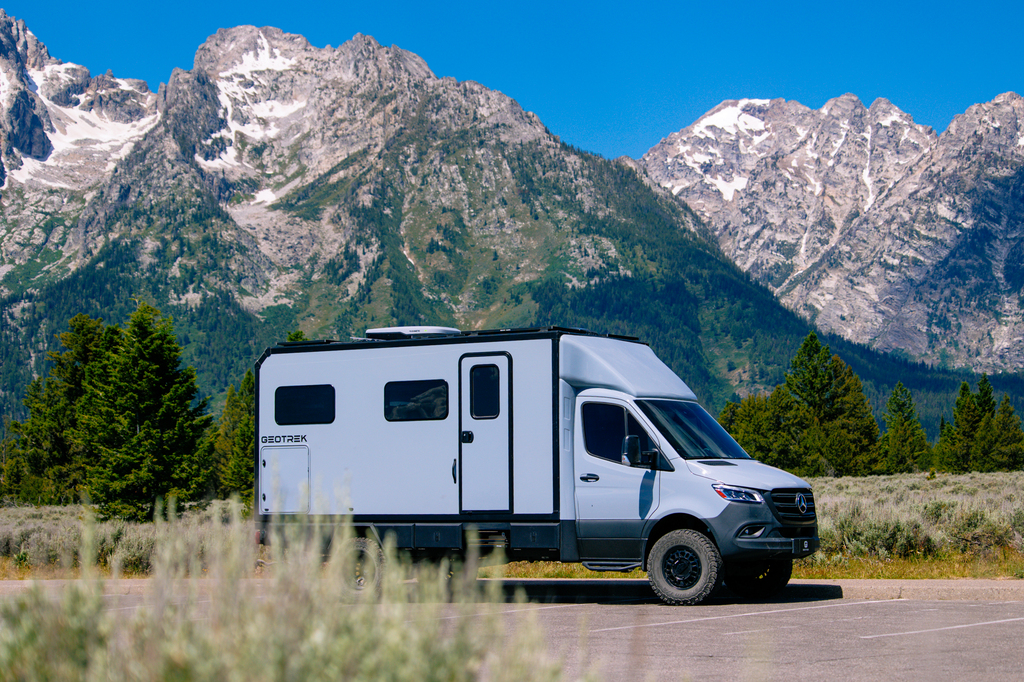
After spending 8 days driving over 1,000 miles in the Geotrek Verus, we’re doing a deep-drive review of this 4 season, off-grid RV! In our review of the Geotrek Verus we focus on whether or not it lives up to it’s off-grid, 4 season RV claims. We also review the livability, layout, and comfort of the Geotrek Verus RV.
Finding an off-grid RV that truly performs in all four seasons is surprisingly hard. While a lot of RVs and overlanding vehicles claim to be four season capable, relatively few live up to real world testing. We recently took a Geotrek Verus on an 8-day road trip in a summer heat wave to test its capabilities and see if this camper lives up to its off-grid, 4 season RV claims. We also wanted to test the livability and functionality of the Geotrek Verus, which is relatively new to the market. In this in-depth review, we explore whether the Geotrek Verus lives up to its claims related to off-grid, 4 season performance. We also share our thoughts on the layout, performance, and livability of this unique composite RV.
Geotrek graciously lent us a 2026 Verus to test for 8 days, but this review is unpaid and reflects our honest opinions and experiences. All images are copyright by Gwyneth and Amiana Manser, and may not be reused or reproduced without permission.
Why you can trust our review of the Geotrek Verus 4 season, off-grid RV
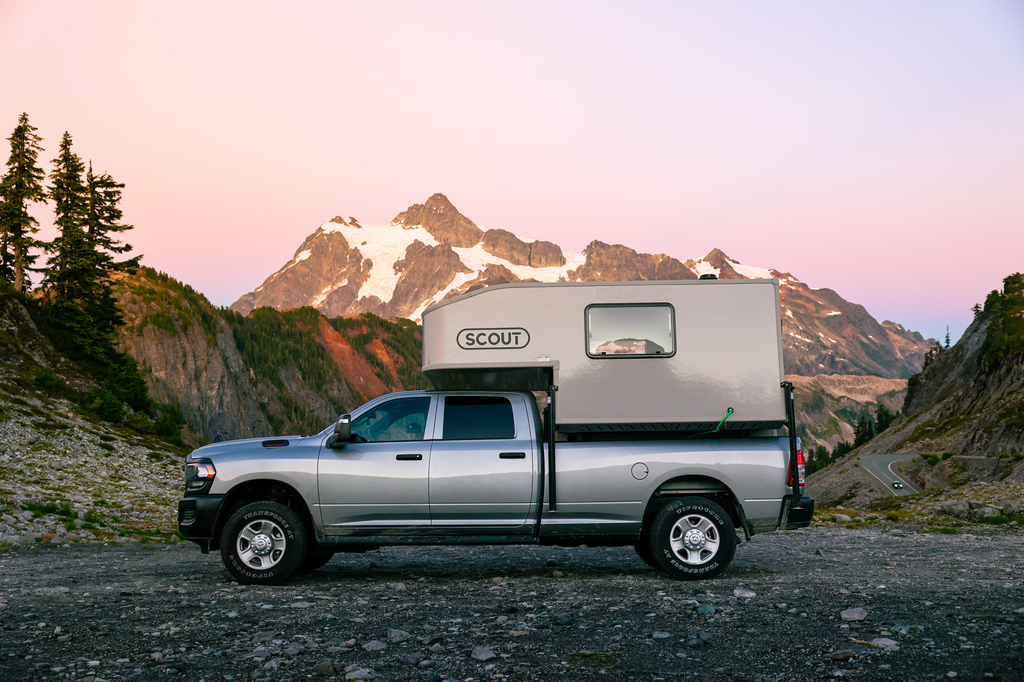
If you’re new here, we’re Gwyn and Ami! We’re overlanding and 4 season RV enthusiasts, and we’ve spent the past six years traveling over 80,000 miles in every season in our own 4 season, off-grid campers.
We started our journey in 2020 with a camper van we built ourselves for year-round, off-grid living. In anticipation of growing our family, in 2024 we transitioned to a Scout Kenai, which is marketed as a four-season and off-grid truck camper. In December 2025 we also spent 11 days road testing an AEONrv, which is similar in form and function to the Geotrek Verus. We demand a lot of our campers, and get a lot back in return. Our goal is to help other 4 season, off-grid RV travelers find the perfect rig for them! Part of how we do that is by testing and sharing reviews of four season, off-grid RVs and campers. You can learn more about us on our about page here, and on our Instagram page.
Having built, lived in, and refined multiple four-season off-grid camper, we bring real-world experience to this review. Our Geotrek Verus review is based on YEARS of 4 season RV travel, and extended living on the road. We also have a deep understanding of the technical components and capabilities of RVs, truck campers, and camper vans. That expertise and experience informs our Geotrek Verus review.

Welcome!
We’re Gwyn and Ami. Based in Spokane, Washington, we’re your guides to the Pacific Northwest and beyond!
We’re adventure travel experts, and our blog is all about helping you find the best hikes, weekend getaways, and national park adventures in the United States and abroad. You can find more on Instagram @gwynandami.
In-depth Geotrek Verus review: RV features and 4 season, off-grid RV performance
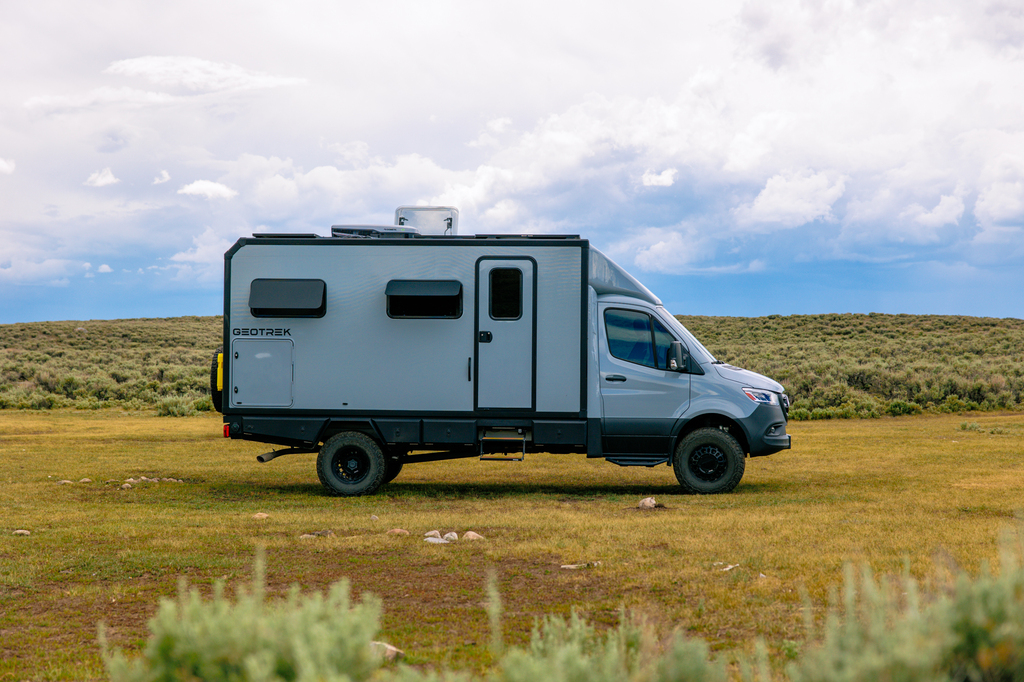
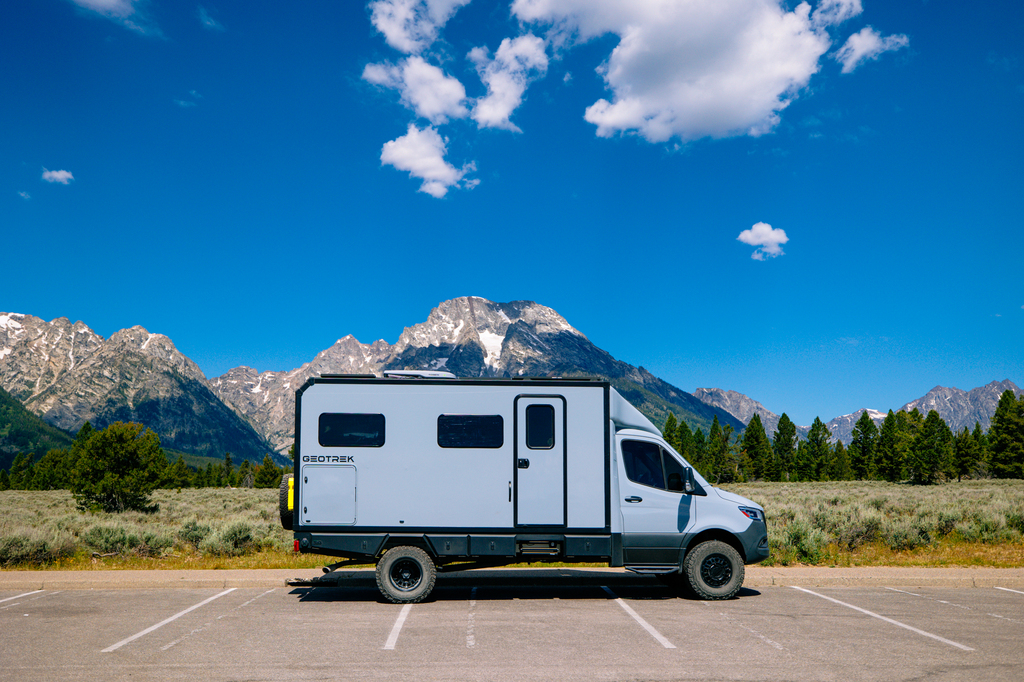
The Geotrek Verus is part of a new generation of off-grid, 4 season Class B RVs that are meant to bridge the gap between campervans and more traditional RVs. Unlike campervans, the Geotrek Verus offers significantly more room inside due to its use of a rectangular composite shell. And, unlike most traditional RVs, the Verus has a robust array of features that allow users to stay off-grid in all four seasons while avoiding the hassle of a generator and campsite hookups.
While it’s not cheap, the Verus also sits at a highly competitive price point in the off-grid four season camper space. As of 2026, the Verus costs about $200,000 more or less fully loaded. Other comparably equipped off-grid, four season RVs range between $150,000 – $400,000.
Below, I share an overview of some of the key components of the Geotrek Verus, and my thoughts on how well they work in real life testing. My review includes a breakdown of the chassis and composite shell, the drivability and off-road handling of the Verus, and the exterior and interior layout and storage. I also go over the sleeping, kitchen, and bathroom arrangements in the Verus, as well as the water, climate control, and power systems. My opinions are sprinkled throughout, but at the end of this Geotrek Verus review you’ll also find my summary of the major strengths and limitations of the Geotrek Verus four season off-grid RV.
Geotrek Verus chassis and composite shell
The Geotrek Verus marries a Mercedes Sprinter chassis to a composite camper shell, which is a big part of what makes this rig so spacious! The Verus’s composite shell has robust R-11 insulation which helps keep the camper cooler in summer and warmer in winter. However, because the composite section of the camper opens up to the relatively un-insulated Mercedes chassis, you’ll still have significant heat gain and loss through the front windows of the camper. This is worth keeping in mind if climate control is your first and foremost goal with an off-grid camper. However, that compromise also gives you more living space, and helps make the Verus work for families of 3-4, which is relatively rare.
The Mercedes chassis features all wheel drive (AWD), lane assist (“Active Lane Keeping Assist” in Mercedes-talk), as well as cross-wind assist and features like Google Car Play. Being a cargo van chassis, the driving area is relatively bare-bones and utilitarian, and I personally find our Ram 3500 truck to be significantly more comfortable. I also found the seats of the Mercedes chassis to be mildly less comfortable than our 2020 Ram Promaster (another cargo van model) and the Ford Transit (which we experienced during an 11 day road trip in an AEONrv). That said, the Mercedes chassis makes up for some of this with more premium features that enhance drivability and road safety.
Driveability and off-road handling of the Geotrek Verus
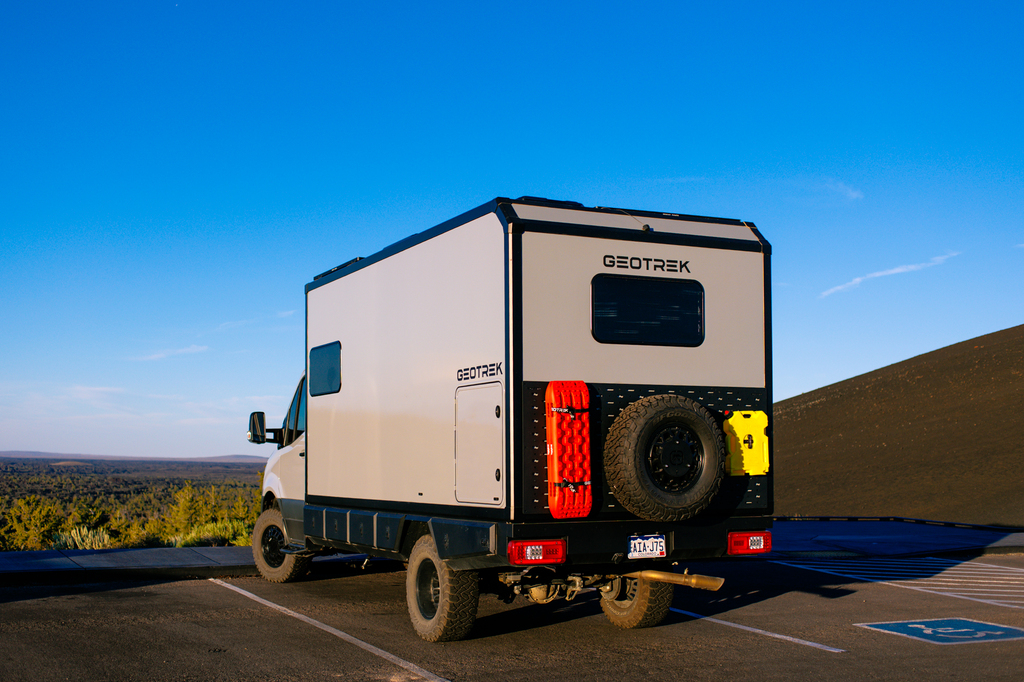
One of the core considerations for an off-grid 4 season RV is how it handles off-road and in adverse weather conditions. After all, what’s the use of a luxury rig if you can’t take it off the pavement, or drive it in bad weather?
I found that the off-road handling of the Geotrek Verus really sets it apart from the other rigs we’ve owned and tested. First, the suspension is fantastic. I found that the AEONrv we tested in winter 2025 felt significantly more ‘top heavy’ when driving, especially around turns. By comparison, despite being nearly 11 feet high, the Geotrek Verus handled tight turns with ease, and never felt unstable or top heavy. The significant ground clearance of the vehicle also makes off-roading easy. We never worried about bottoming out, and were able to navigate gnarly washboard roads to boondocking sites with ease. In fact, I think the Verus has significantly more ground clearance than our Ram 3500 truck!
The AWD performance also felt significantly better than that of the AWD Ford Transit, and was miles ahead of our two-wheel drive Ram Promaster. Even with the massive load of a camper, the Verus was able to stop and start fairly quickly, and it even handled well in relatively high winds. We spent 8 hours driving across notoriously windy Wyoming and, despite significant gusts and a big dust storm, we were able to continue driving, albeit slightly slower than the posted 80 mph.
On road, the Verus fits into a standard parking lot, which is a huge plus.
Driveability and off-road handling of the Geotrek Verus: where the Verus falls short
While many aspects of the Verus impressed me in terms of handling and vehicle features, my one big gripe about the Geotrek Verus’ drivability has to do with the stock Mercedes seats.
First, in my honest opinion, seats themselves are not very comfortable. However, more importantly, the seats sit very high due to the substantial stock lift and swivel mechanisms installed underneath them. I am 5’4” and Amiana is 5’6”, and neither of us could touch the floor easily. Our feet basically ‘dangled’ while driving, which gets uncomfortable very quickly. We had the same issue in our Ram Promaster campervan build (which also had swivel seats), and we eventually solved the problem by building a little ‘platform’ so we could rest our feet while driving.
Fortunately, these issues are easy (but perhaps expensive) to remedy. If the seats don’t work well for you, you might wish to consider upgrading the seats and/or modifying the seating area to provide more leg support while driving. I’ve heard good things about Scheel-Mann seats as a premium replacement option, but have yet to experience them for myself.
Overview of the Geotrek Verus layout and storage
Below, we review some of the key components of the Geotrek Verus in terms of layout, storage, and interior features. This includes the seating and tables in the Verus, the exterior and interior storage, and core living areas (bathroom, sleeping areas, and kitchen).
Seating and tables in the Geotrek Verus
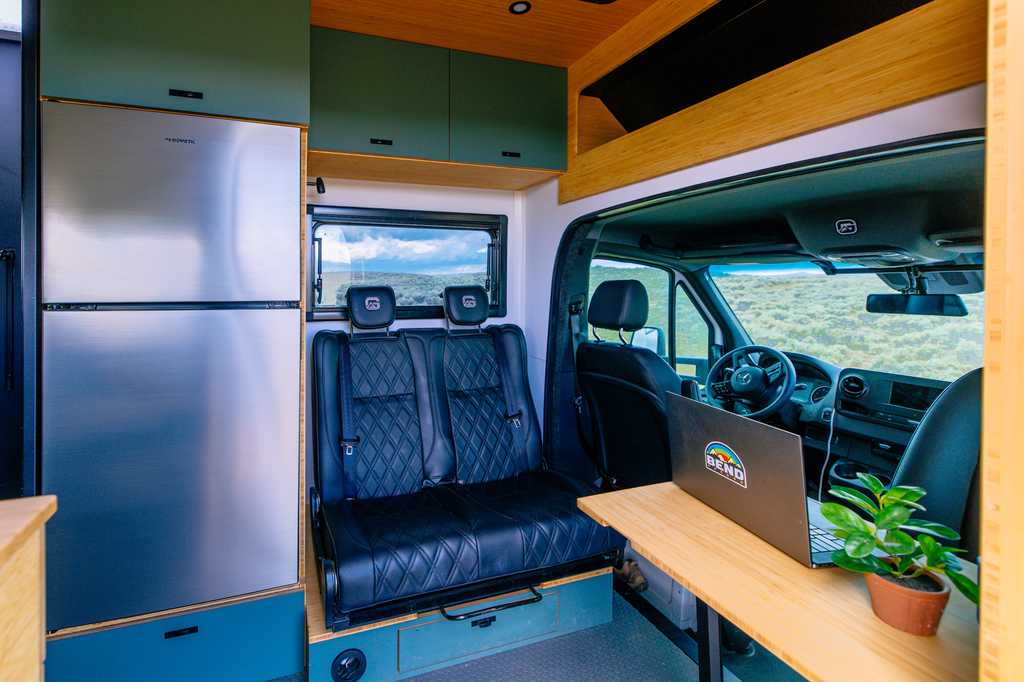
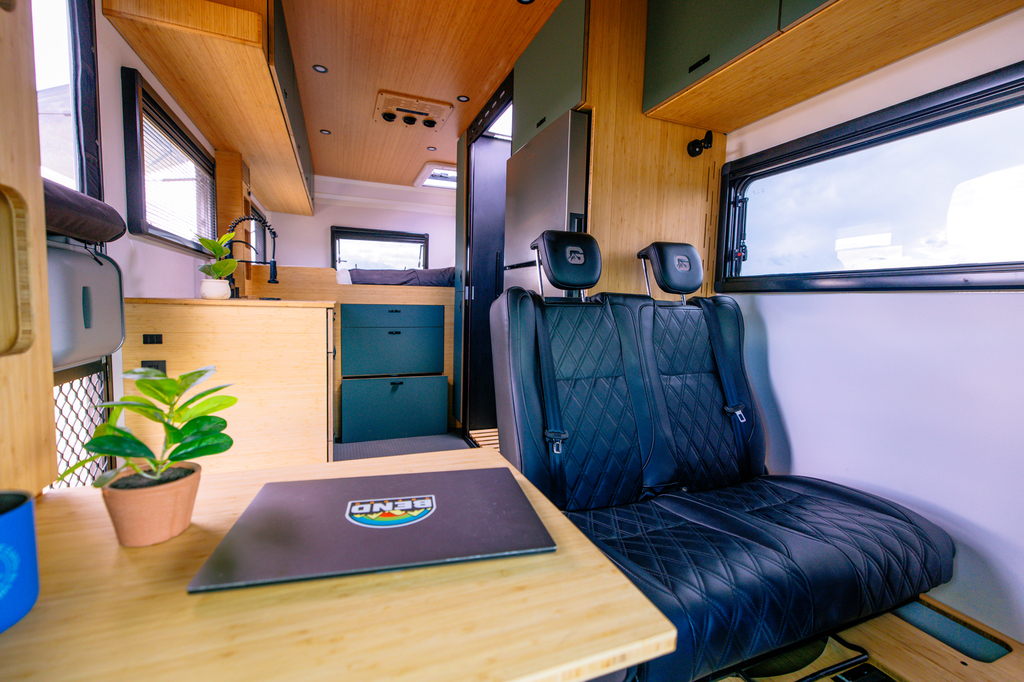
The chassis of the Verus features two swivel seats, and the composite body is home to a dedicated passenger seat for two people that sits directly behind the driver’s seat. The passenger seat can be rotated to a north-south or east-west orientation, and the seat folds down flat into a bed.
If you’re traveling with young children and car seats then this setup has some notable advantages over other similar RVs on the market, since the passengers sit immediately behind the driver (and not isolated towards the back of the rig). However, the tradeoff is that the extra seats are relatively narrow and low to the ground, which might not work for taller and broader people that want more space. The Verus also has a Lagun table mounted on the two-person passenger seat. We found the mount sat too high to be a usable table when seated, but I think this is something the Geotrek team is working to modify for future designs.
Additionally the Geotrek has a clever flip up table that sits immediately behind the chassis passenger seat. The table is a smart and useful feature, but the ergonomics might not work well for everyone. It sits a bit high, and can’t be height adjusted, so I found it uncomfortable to use for long periods of time. That said, it should work very well for taller people.
One notable feature of the Geotrek Verus is that there is an abundant amount of floor space between the chassis and the kitchen. Some people might see this as ‘wasted’ space, but I love that the camper’s layout feels more open and flexible because of this. I think the generous floor space would work especially well for people with large dogs that need space to sit, roam, and rest inside.
Gear garage, exterior storage, and interior storage in the Geotrek Verus
Exterior storage and gear garage in the Geotrek Verus
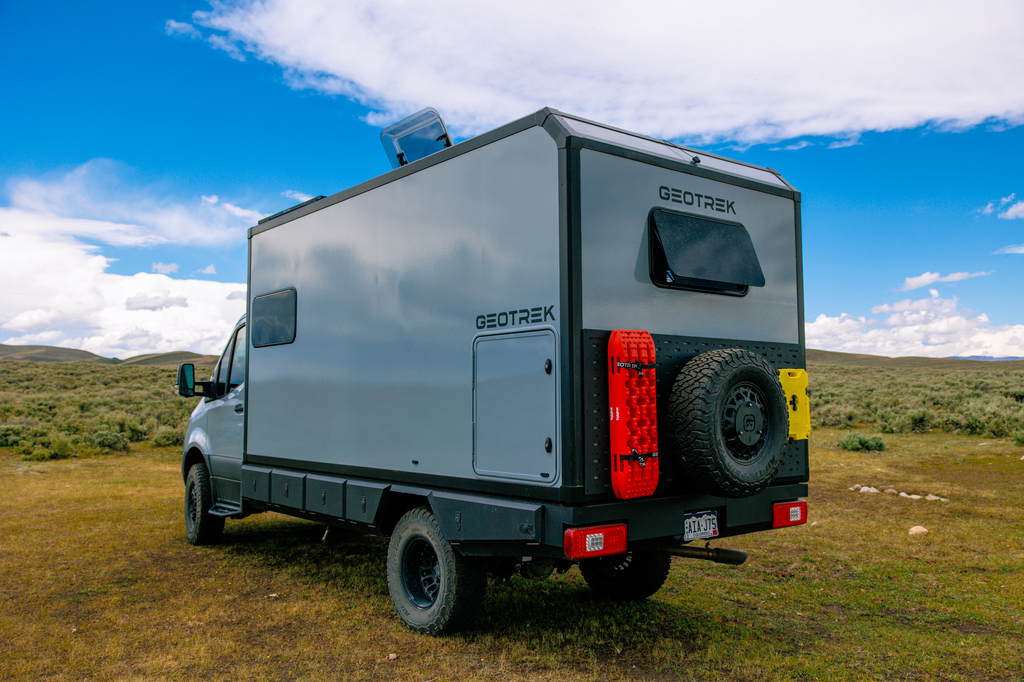
If I can stress just one thing in this 4 season, off-grid RV review, I want to emphasize just how much storage there is in the Verus. It’s truly incredible!
Outside of the rig, the Verus has a massive rear garage that can accommodate multiple bikes, skis, SUPs, and nearly whatever else you can imagine (I’m not sure about full size kayaks, though). The garage is heated, and also houses your water and power systems, as well as outlets and an outdoor shower hookup. The garage space sits immediately beneath the queen size bed, and can be accessed via two locking outside doors, which are located on the east and west sides of the camper. Both doors have dual locks on them, which is great for added security.
In addition to the garage, the Verus also has a robust suite of locking metal compartments in the flatbed that supports the composite shell. These are perfect for storing outdoor gear that isn’t temperature sensitive, as well as any hoses or power components you don’t want to keep elsewhere. We also found them handy for stashing trash and recycling when off-grid.
Interior storage in the Geotrek Verus
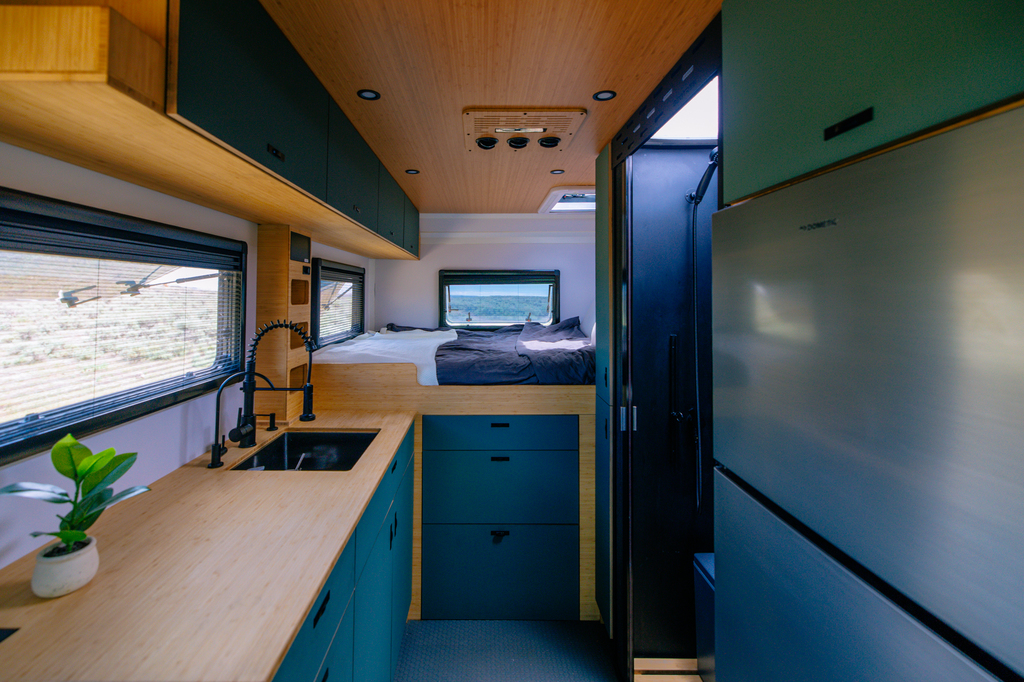
Inside the Geotrek Verus you’ll find even more storage for all of your everyday essentials like clothing, food, adventure gear, and more. There are seven massive overhead cabinets throughout the rig, as well as a storage compartment above the chassis. In the kitchen and under the bed you’ll also find a series of deep drawers, plus clever additional storage under the fridge, above the bed, and behind the passenger seat. There is also a full hanging ‘wardrobe’ next to the bed– it’s small, but great for nice clothes you don’t want to shove in drawers!
Overall, I would describe the storage in the Verus as exceptional. If you like to travel with lots of creature comforts or are looking for a full-time rig that can accommodate lots of gear and stuff, the Verus is a great option to consider.
Living spaces: sleeping, cooking, and bathroom in the Geotrek Verus
Sleeping and beds in the Geotrek Verus
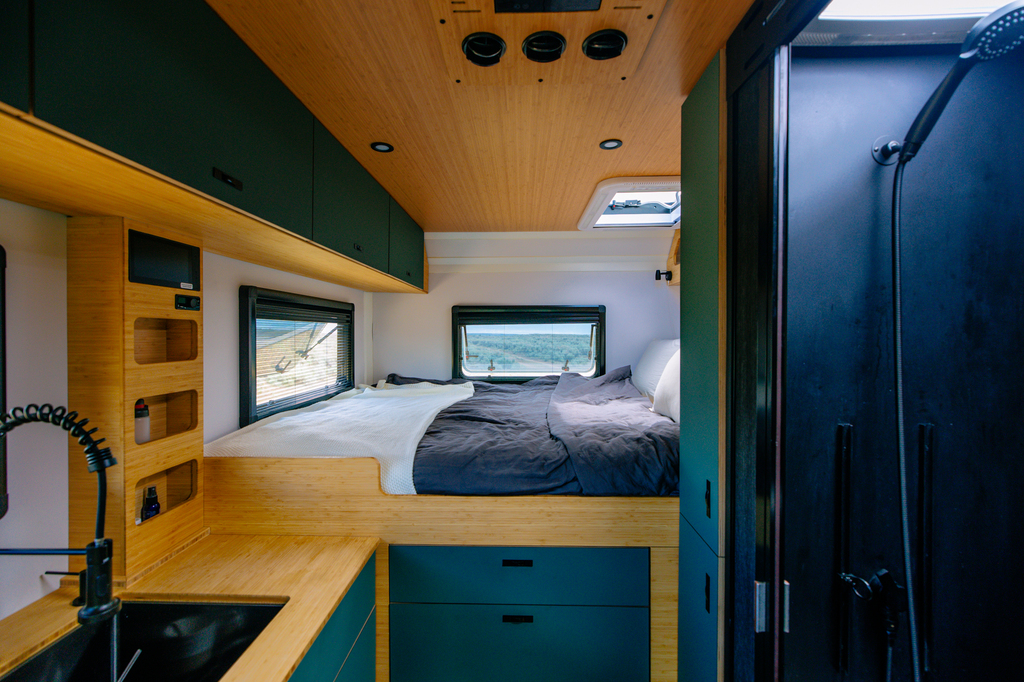
The Geotrek Verus offers two main options for sleeping up to three people comfortably, and can likely be modified to accommodate four. The main sleeping area is a true queen size in the back of the camper, sleeping east to west. One of the drawers pulls out to act as a secure step for getting in and out of the bed, which has extremely generous headroom – even my tallest family members (6’4”) would be able to sit up in bed! I found the bed to be extremely comfortable, and appreciated that there are windows on two sides, as well as a large skylight. This allows you to get a nice crossbreeze on warm nights if you don’t want to run the AC.
The additional bed in the Geotrek Verus is actually the two-seater passenger seat, which can fold down flat. Amiana and I admittedly didn’t test this feature, so I can’t speak to how comfortable the extra bed is. However, I suspect it would work well for a young child, and less well for older children or adults. However, additional sleeping could easily be configured using a camping cot, which would likely fit well between the passenger seat and the rear camper door. Overall, from a sleeping perspective, the Verus works very well for two people and would likely work great for three! How well it could handle a family of four is up for debate.
Kitchen and cooking in the Geotrek Verus
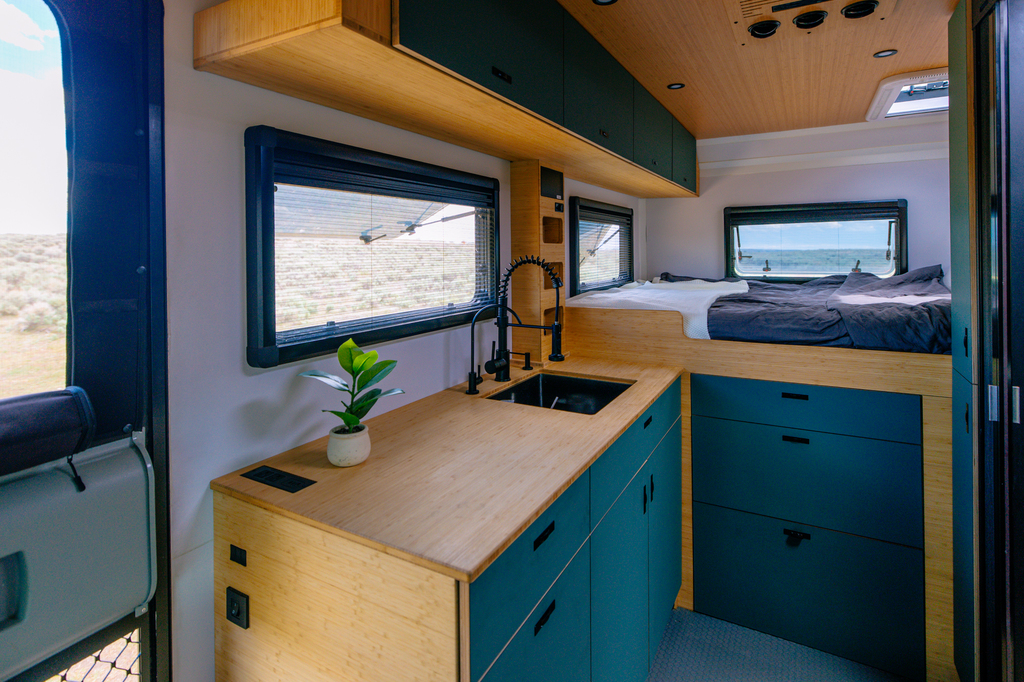
The Verus makes cooking on the road exceptionally easy, and I found this is a huge benefit for the camper. We cooked all of our own meals while on the road for eight days, making everything from pour over coffee to pasta and sausages, salads, and more. There was more than enough counter space for an induction cooktop and meal prep. The sink is also deep and wide, which is a huge plus for washing dishes (my least favorite camper task!).
Additionally, the Verus features an astoundingly big Dometic fridge and freezer. They use a model similar to the DMC4101, which is 10 cubic feet. While the size of the fridge results in a significant electrical draw, the power system is more than equipped to handle it. I also found the fridge surprisingly quiet.
Overall, I would highly recommend the Verus for people that like to cook while on the road. The ample storage, huge fridge, and generous counter space and sink size made cooking full meals relatively effortless.
Bathroom and shower in the Geotrek Verus
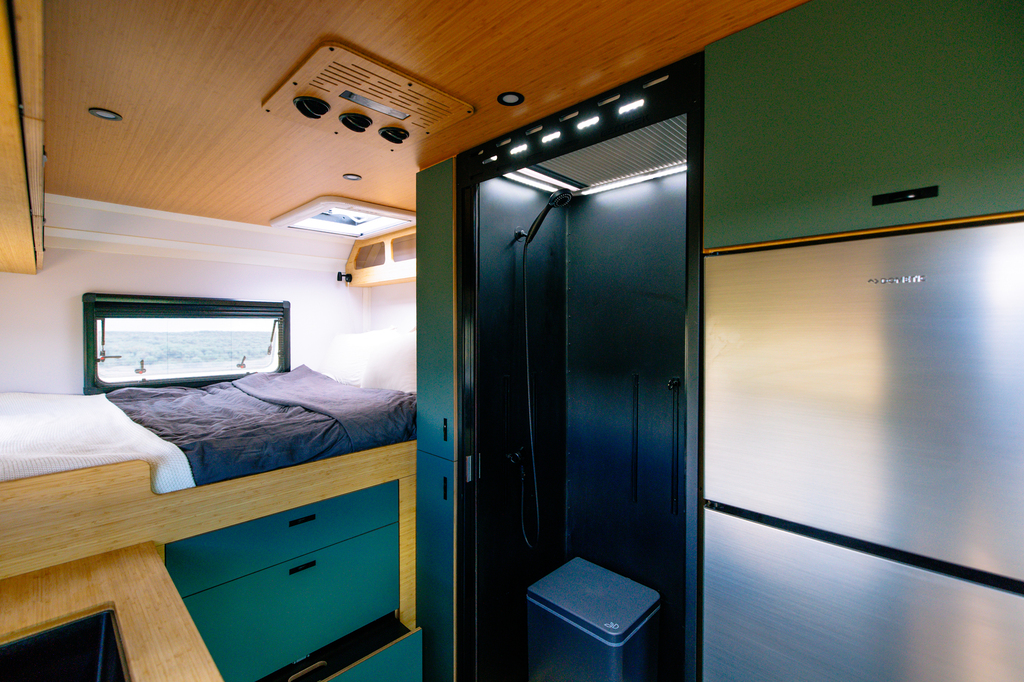
One of the biggest challenges in the four season, off-grid RV and camper market has been fitting a full size enclosed shower and toilet in a rig. For example, many of the popular off-grid, four season truck camper brands (like Scout, Alaska, and AT Overland) lack dedicated bathroom spaces, which is a challenge for travelers like us that spend extended periods of time in our rigs. The Geotrek Verus solves this problem with a generous shower room with a massive skylight for venting and a 4 gallon hot water heater. The shower worked super well, and was spacious and comfortable with thoughtful shelving for toiletries. There’s also a wood shower pan to keep your feet above any standing water.
One issue we did discover while using the shower is that the flat shower pan struggled to drain when the vehicle was not sloped in a specific direction. We have the same problem in our Scout Kenai. A sloped drain, or multiple drain holes, would fix this. I believe this is being addressed in subsequent models. It’s also worth noting that the shower drains straight to the ground, not to a greywater tank, which can be an issue in some locations.
In addition to a shower, Verus buyers have several options of toilets. We used a Trelino toilet in the Verus, which we previously reviewed here. I find the Trelino to be imperfect for solids, but excellent for handling liquid waste.
Note: aspects of the shower design have changed since this model was built. The shower walls are now white, and there is a full closing and locking door rather than a pocket style door.
Look and feel of the Geotrek Verus
From a livability standpoint, something I also liked about the Verus is its homey and ‘organic’ aesthetic. The Geotrek Verus relies on warm bamboo and rich cabinet paint colors to give it a homey, premium look and feel. The materials used are real wood and paint, making components easier to repair or touch up than some other common RV building components. Overall, the Verus feels pleasant and relaxing to be inside, rather than dated and visually overwhelming.
Geotrek Verus water, climate control, and power systems for off-grid, 4 season RV use
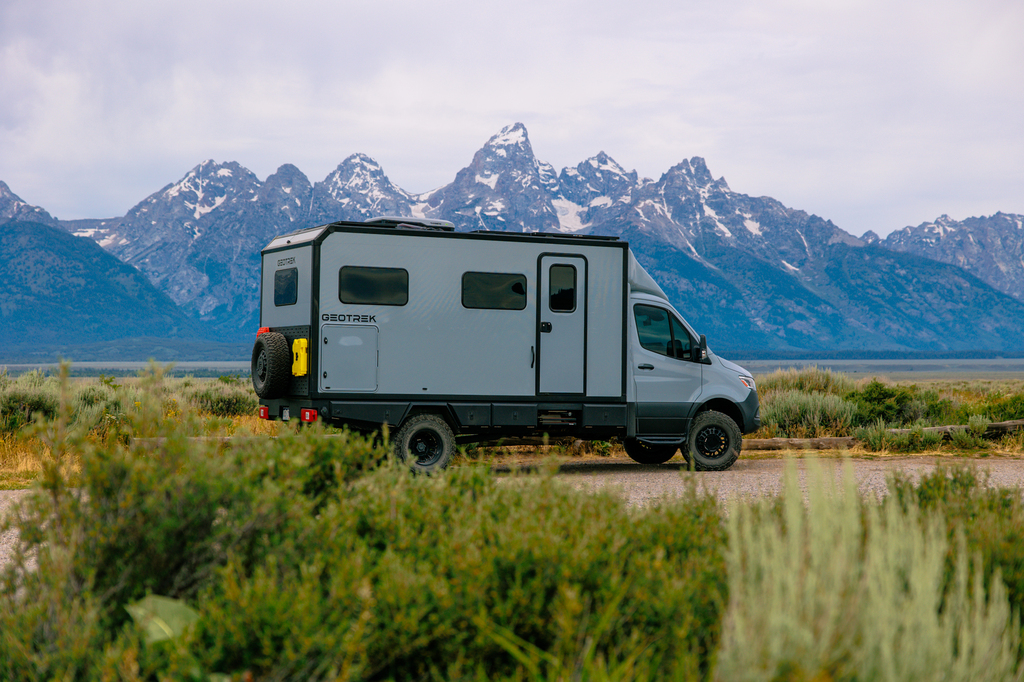
In addition to incredible storage capacity, another area where the Geotrek Verus really shines is in its four season, off-grid RV design. Below, I review some of the water, power, and climate control systems that set the Geotrek Verus apart and allow it to operate well in all four seasons.
Four season, off-grid RV water systems in the Geotrek Verus
For extended stays off-grid and away from civilization the Verus has a large 40 gallon fresh water tank and a 20 gallon grey water tank. Both tanks sit inside the composite envelope, which is a huge advantage in winter (they won’t freeze!). There is also a water filter for drinking water.
How you feel about 40 gallons of water probably depends on your lifestyle. We found the water supply more than adequate for multiple showers, drinking, and cooking/cleaning up after all of our meals in the camper for multiple days. We only refilled once during our eight day trip.
Off-grid power systems in the Geotrek Verus
The Geotrek Verus boasts an incredible 10 kWh of power, which is provided via a highly user-friendly EcoFlow battery system. Many other companies charge a pretty penny to add additional solar beyond 4 – 6 kWh, so Geotrek really stands out for making 10 kWh standard in the Verus. This system can be charged via an impressive 1,000 watt solar array, or via DC to DC charging while driving (basically, your engine helps charge the batteries when the car runs). Even when using Starlink, the AC, induction cooking, hot water heater, and appliances (plus charging laptops and cameras!), we never dipped below 60% battery capacity, and it recharged quickly the next day.
The merits of the EcoFlow system can be debated versus a more modular setup using independent batteries and systems (such as Victron components– which we love and used in our camper van build!). The EcoFlow might be more challenging to repair since it’s a fully integrated power system. However, it’s also more user friendly and it worked great for us during 8 days of rigorous testing.
Climate control in the Geotrek Verus: heating and cooling
Another strength of the Geotrek Verus is its climate control options. We did our 8-day road trip in the Verus during an intense July heat wave in the western USA, with temperatures getting close to 100 degrees during our travels. The Verus has a robust 12 Volt AC system that sits near the bed and efficiently cools the space. We ran the AC for multiple hours a day in 80-95 degree temps and found the battery systems could support the load. Admittedly, the AC is relatively loud. But if you run it while sleeping it functions essentially as a white noise machine.
The Verus also has a Maxxair fan, four awning windows, two skylights, and a rear door with a full screen. All work very well to move air through the camper without the use of AC.
For winter use, the Verus uses an Eberspächer diesel heater that taps directly into the truck’s diesel tank, so you don’t have to manage multiple fuel sources. We installed the same heater (the gas version) in our Promaster and our Scout Kenai truck camper, and can confirm it’s a fantastic and easy to use system. It uses minimal fuel, heats spaces quickly, can handle high elevations (a common shortcoming with some heaters), and can be programmed around your needs.
The Verus itself is constructed out of R-11 composite, so it has robust insulation. I believe they use Lemker Overland composite panels. However, as with all campers, the windows and skylights can serve as a source of significant heat gain and loss. Additionally, because the chassis is open to the composite back, you will have significant heat gain and loss via the cab space. This can be improved by using window covers, but they also block your view and access to natural light.
Geotrek Verus review: strengths and limitations of the Geotrek Verus four season off-grid RV
Strengths of the Geotrek Verus four season off-grid RV
While the Verus has many strengths, below are a few things that really stood out to me after testing it out during our eight day summer road trip:
- A true four season RV. While we didn’t get to test the Verus in winter, it performed exceptionally well during a heat wave. We stayed cool and comfortable, and the Verus is well-equipped to keep people and pets temperature-regulated in all seasons.
- Great off-grid performance. During our trip we never plugged in, despite being relatively ‘promiscuous’ with our power use. For those looking to stay off-grid without a generator, the Geotrek Verus should meet your needs well.
- Tons of usable storage. The Verus stands out for its high level of interior and exterior storage. You can fit lots of gear, clothes, and food for full- or part-time life on the road.
- A comfortable and flexible bathroom. A huge strength of the Verus is its generously sized wet bath. This was the most comfortable RV shower I have used, and I like that I wasn’t beholden to a blackwater tank.
- Generous floor space. The Verus has a lot of floor space, making it easy to navigate with multiple people. It can also accommodate pets and camp cots.
- Homey and ‘organic’ aesthetic. The Geotrek Verus relies on warm bamboo and rich cabinet paint colors to give it a homey, premium look and feel.
- On- and off-road handling. The Verus stands out for having a fantastic suspension, high clearance, and AWD making it feel exceptionally secure both on- and off-road.
- Seating for four. The Geotrek stands apart for having safe seating for four, all of which is positioned towards the front of the camper. This is especially great for families with younger kids who may not want to sit far away from their parents.
Limitations of the Geotrek Verus four season off-grid RV
Overall, we were very impressed with the Verus. However, like every RV or camper, there is room for improvement. Below are some limitations to be aware of:
- Shower pan draining. This issue may have been addressed in subsequent models, but the Geotrek Verus we tried had a flat shower pan that struggled to drain when the vehicle was not sloped in a specific direction. We have the same problem in our Scout Kenai. A sloped drain, or multiple drain holes, would fix this!
- Driving comfort. While the Geotrek Verus handles very well, I personally found the seats themselves uncomfortable for driving long distances. This is especially true for shorter people (under 5’7” or so), whose feet may not touch the ground while driving due to the height of the passenger and driver seats.
- Lack of dinette/workable table space for four. One of my favorite features of our Scout Kenai truck camper is the surprisingly generous dinette seating area in the camper. I found the Verus difficult to work from given the lack of height-adjustable tables that worked for me. I also found this to be a limitation while eating. Overall, I found this to be the biggest drawback of the Verus.
- Chassis and composite connection. Like most camper vans, the Verus relies on the driver and passenger seats at the ‘main’ seating in the camper. The seats are on swivels, which means the cab is open to the back of the camper. This can reduce privacy and temperature management, as this area has huge windows and is relatively uninsulated. This could be good or bad, depending on your goals and depending how comfortable you find the seating in the cab!
Final thoughts: is the Geotrek Verus the ultimate 4 season, off-grid RV?
The Geotrek Verus is a fantastic addition to the 4 season, off-grid RV space. The RV handled beautifully in hot summer weather, off-roading, and off-grid for an extended period of time, and I feel confident it will also do well for winter travel. Overall, I can highly recommend it for 4 season, off-grid RV use.
In addition to its robust features for four season and off-grid use, the Verus stands out for its ability to seat and sleep 2-4 people (or 1-2 large dogs!). Further, the interior and exterior storage, cooking space, and bathroom are all well-executed and generously sized, especially for people looking to spend long periods of time on the road. Other similar RVs include the Supertramp Paragon, AEONrv, Rossmonster Loft, and the Ridge from Overlander, and the Verus competes well in terms of amenities, layout, and price point.
For me, the biggest limitation of the Verus is the seating and working space, which I didn’t find as comfortable as I would like. If the Verus were to incorporate a true dinette space for eating and working – and different seats for driving – then I think the Verus would be a home run. However, doing so would sacrifice significant space, making the Verus feel less open. Ultimately, whether the seating works well for you will likely come down to personal preference, and how you plan to use the rig. We often spend 8+ hours a day in our rigs working from our laptops, which means a comfortable workspace is critical. We’re also both on the short side, which impacted our experience with the table and chair arrangements.
Have questions about the Geotrek Verus? Let us know in the comments below!


Which would you buy between Verus and Aeon?
That’s a great question! I know this isn’t the most satisfying answer, but I think it depends on your use case.
I really like having a traditional dinette. We have that in our current Scout truck camper, and we use it every day when we’re in the camper. It’s great for dinner and working from the road. The Verus has something similar, but it lacks much of the functionality and comfort of a TRUE dinette— which the AeonRV does have. On the other hand, the Verus has better heating and cooling overall (the cooling in the AeonRV gets “stuck” in the bed area, which is a bummer), and I think the Verus platform handles a bit better off-road. I also think it’s a slightly better “deal” overall.
Ultimately, for us a truck camper setup still beats out both of those camper models, but that comes down largely to personal preference! Trucks are just MUCH more comfortable to drive for long distances than any of the cargo van chassis, all of which we’ve experienced (we owned a Ram Promaster, AeonRV uses Ford, and Versus uses Mercedes).