Ultimate guide to one day in Hawai’i Volcanoes National Park
In this guide we share how to spend one day in Hawai’i Volcanoes National Park! This comprehensive itinerary includes everything you need to know about what to see and do in Hawai’i Volcanoes National Park, when to visit, and where to stay.
Hawai’i Volcanoes National Park is one of the most unique national parks in the United States! Located on the Island of Hawai’i (sometimes called the ‘Big Island’)”, this spectacular national park protects two of the world’s most active volcanoes, Kīlauea and Mauna Loa, and showcases a constantly evolving landscape shaped by lava. Visitors will experience everything from steaming crater rims and lava tubes to lush rainforest and dramatic coastal views along the Pacific Ocean.
Below we share how to spend one day in Hawai’i Volcanoes National Park. Our itinerary for Hawai’i Volcanoes National Park highlights the park’s must-see viewpoints, scenic drives, and short hikes, making it perfect for visitors with one full day to explore. It can easily be adjusted depending on how much time you have and current volcanic activity. We also share what to pack, where to stay, and the best time of year to visit Hawai’i Volcanoes National Park.

Welcome!
We’re Gwyn and Ami. Based in Spokane, Washington, we’re your guides to the Pacific Northwest and beyond!
We’re adventure travel experts, and our blog is all about helping you find the best hikes, weekend getaways, and national park adventures in the United States and abroad. You can find more on Instagram @gwynandami.
The ultimate guide to Hawai’i Volcanoes National Park: one day itinerary
We’ve done the research so you don’t have to! Below we share the perfect itinerary for one day in Hawai’i Volcanoes National Park. Before we dive into the itinerary, we also share the best time of year to visit Hawai’i Volcanoes National Park, where to stay nearby, and what to expect at each stop along this itinerary. You will also find tips for sunset volcano viewing, one of the most memorable experiences in the park!
We last visited in April 2026. Before visiting, always check to confirm trails are open, as this is a dynamic landscape! I also recommend downloading the trails before heading to the park, as cell service can be spotty.
Use this link to get 30% off AllTrails Plus ($35.99/year) and AllTrails Peak ($79.99/year), which gives you offline access to trail routes and wayfinding.
How to get to Hawai’i Volcanoes National Park
Hawai’i Volcanoes National Park is located on the east side of the Island of Hawai’i, near the small town of Volcano. The Island of Hawai’i has two major airports, one on each side of the island, so how you get there depends on where you’re flying into:
- From Hilo (closest option): If you’re flying into Hilo International Airport (ITO), you’re in the most convenient location. The park entrance is about a 40-minute drive from Hilo, making this the easiest and quickest option.
- From Kona: If you’re flying into Ellison Onizuka Kona International Airport at Keāhole (KOA), located on the west side of the island, expect a longer but more scenic drive. The park entrance is about 2 to 2.5 hours away, depending on your route and traffic.
Need a rental car to get around? We find that booking.com usually has the best prices on rental cars! That’s what we used for this trip.
When to visit Hawai’i Volcanoes National Park
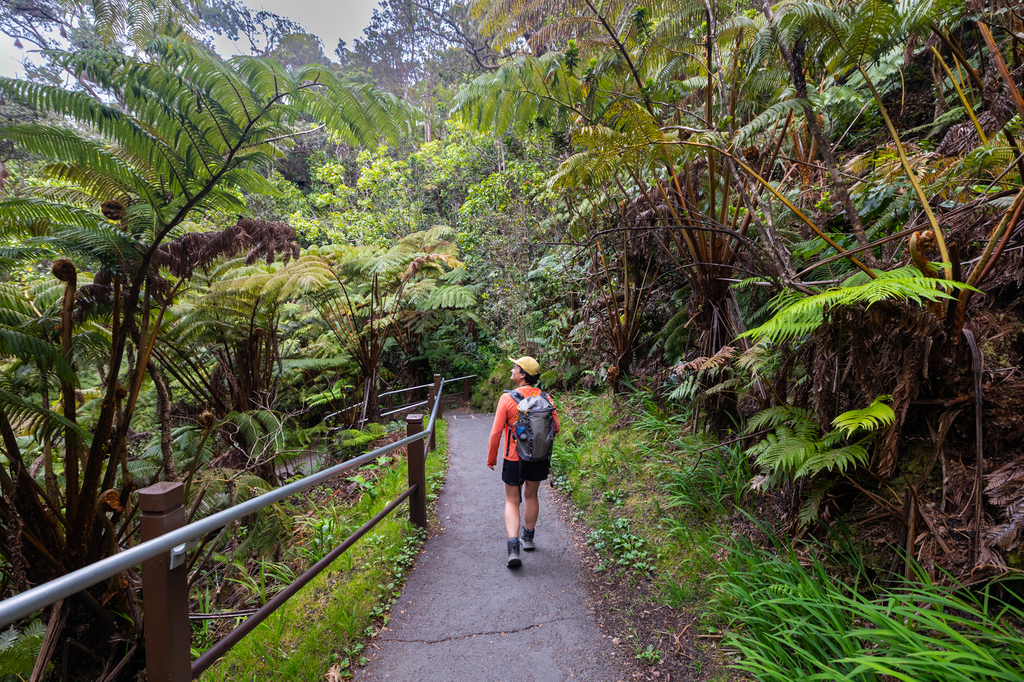
Hawai’i Volcanoes National Park is a fantastic year-round destination to visit (and it’s open 24 hours a day!). No matter when you visit, keep in mind that volcanic activity, not the season, is what determines your chances of seeing lava!
Generally, spring (March – April) and fall (October – November) are ideal for pleasant weather in Hawai’i Volcanoes National Park. If you want to avoid the crowds, avoid the weeks surrounding Christmas and New Year’s, as well as the spring break season. Additionally, the week of the Merrie Monarch Festival (April) in Hilo causes increased demand for lodging accommodations, which can push up prices.
We visited in mid-April, one the tail end of spring break. Temperatures were warm but not too hot, though it was quite humid. We did not experience much rain.
Will I see lava when visiting Hawai’i Volcanoes National Park?
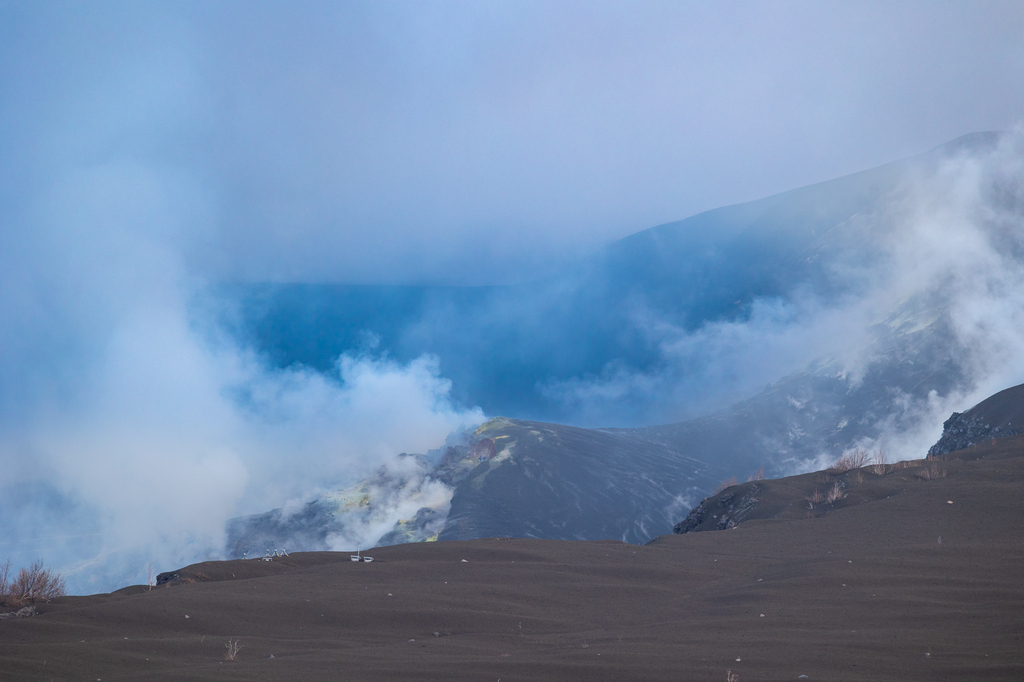
The short answer… it depends when you visit! Hawai’i Volcanoes National Park has been in an active eruptive period since 2024, but it doesn’t erupt continuously. Instead, activity happens in episodes. Hawai’i Volcanoes National Park eruptions can last for several hours, followed by quieter stretches that may last days or even weeks. As of this post, there had been more than 40 eruptive episodes since 2024, with activity continuing intermittently.
Recent eruptions have been centered at Kīlauea, specifically within the summit crater of Halemaʻumaʻu. When we visited in April 2026, we didn’t catch an active lava eruption, but the crater was still incredibly dynamic! We saw an intense glow after dark and constant steam rising from the vent.
While scientists can often identify patterns of increased activity leading up to an eruption, the exact timing is unpredictable. That’s why there’s never a guarantee you’ll see lava, but visiting during an active period definitely increases your chances! I highly recommend monitoring the National Park Service website for eruption updates (and safety information), as well as the USGS Volcano Updates website for eruption predictions and scientific analyses.
Where can I see lava in Hawai’i Volcanoes National Park

During an eruption, there are several spots to view the lava. The most famous spot to view the lava is at Keanakako’i Overlook. This viewing spot requires a 2 mile (round trip) hike to the observation point, but the views are worth it! You can also view the eruption from the Crater Rim Trail – notably the Kilauea Overlook, the Uekahuna Overlook, and the Steam Vents observation area, all of which have excellent views of the crater.
The Uekahuna Overlook and Kilauea Overlook are just a short distance from the parking lot, making them much more accessible. The Kilauea Overlook is ADA accessible. You can read more about accessible trails and viewpoints here on the Hawai’i Volcanoes National Park website.
If you want to view the eruption from the comfort of your hotel, I recommend booking a room at Volcano House, which is situated on the crater rim!
Where to stay near Hawai’i Volcanoes National Park
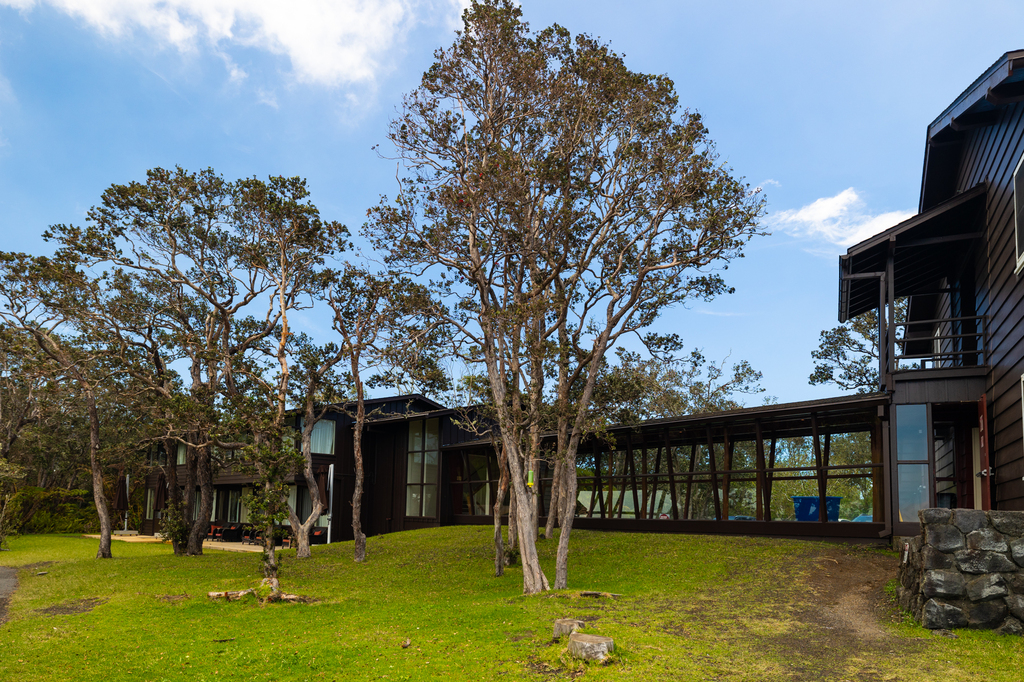
If you’re planning to spend just one day in Hawai’i Volcanoes National Park, the best places to stay are either in Volcano or Hilo. Staying in Volcano puts you right at the park entrance, meaning little to no driving to start your day. Hilo, on the other hand, is about a 40-minute drive away and offers more options for food, accommodations, and things to do outside the park.
Where to stay in Hilo: We stayed at the Hilo Hawaiian Hotel, located just outside downtown Hilo. It’s a solid, convenient option – rooms were clean, parking was free, and the drive to the park was easy and manageable.
Where to stay in Volcano: If you want a truly unique experience, book a stay at Volcano House. Located inside the park, this historic hotel sits right on the rim of the Kīlauea caldera. On nights when the volcano is active, guests can see lava from their rooms. It’s one of the most unforgettable places to stay on the island!
How to get around Hawai’i Volcanoes National Park
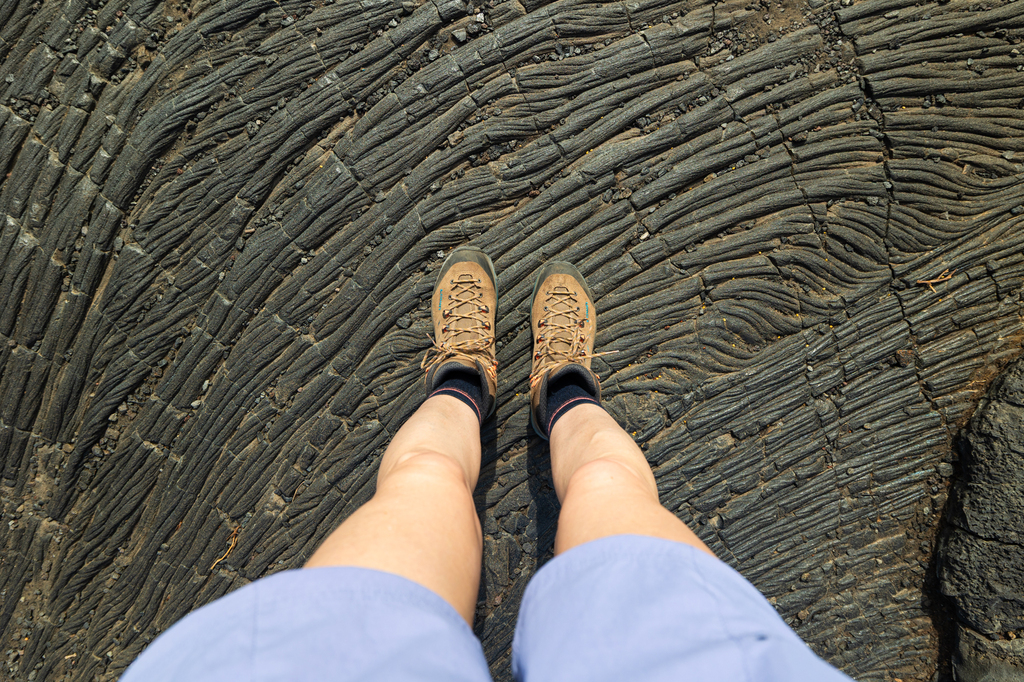
The best way to explore Hawai’i Volcanoes National Park is by car. Public transportation is extremely limited, and most viewpoints, trails, and scenic drives are spread out across the park. Make sure to start with a full tank of gas. There are no fuel stations inside the park itself, and services are limited once you’re inside. A standard 2-wheel drive (2WD) vehicle is completely fine for visiting the park. Roads are fully paved and well maintained throughout the main areas. For this 1 day in Hawai’i Volcanoes National Park, you will only need a 2WD vehicle.
Need a rental car to get around? We find that booking.com usually has the best prices on rental cars.
A word of caution: eruptions can cause massive outpourings of volcanic debris, which can damage your vehicle. Plan accordingly– and strongly consider robust rental car insurance if you’re visiting during an eruptive episode!
What to pack for Hawai’i Volcanoes National Park

Pack for a range of conditions Hawai’i Volcanoes National Park, as the park can shift quickly between warm sun, wind, and cool, damp weather. During the day we found the hikes to be hot and humid, but once the sun set the wind picked up and the park got cold!
- Loose clothing: Wear light, loose clothing during the day. The sun can be intense and the air is often humid. When we visited in April, the high temperature was 70 degrees F, but it felt SO HOT! I recommend wearing a sunshirt to protect your skin.
- Warm layers: Bring a warm jacket for volcano viewing after dark. The temperature drops quickly after dark. We pack the REI Trailmade fleece on our travels (mens and womens).
- Rain jacket: The Hilo side of the island is known for frequent rain showers. Rain jackets are also great for breaking wind! We pack the REI XeroCloud 3L on our travels (mens and womens).
- Hiking boots: Sturdy footwear is essential – lava rock terrain can be uneven and unstable. The Lowa Renegade boots have been our go-to hiking boots for years (mens and womens).
- Food + water: Services and amenities are limited inside the park. Stay hydrated as this park is hot and exposed!
- Sunscreen: Most areas are exposed with little to no shade, so sunscreen is a must. We recommend a sunscreen that is also reef-safe.
- National Park Pass: Don’t forget your America the Beautiful pass for entry into the park. You can also purchase an entry ticket at the front entrance of the park.
How to be a good visitor on Hawai’i: the Pono Pledge
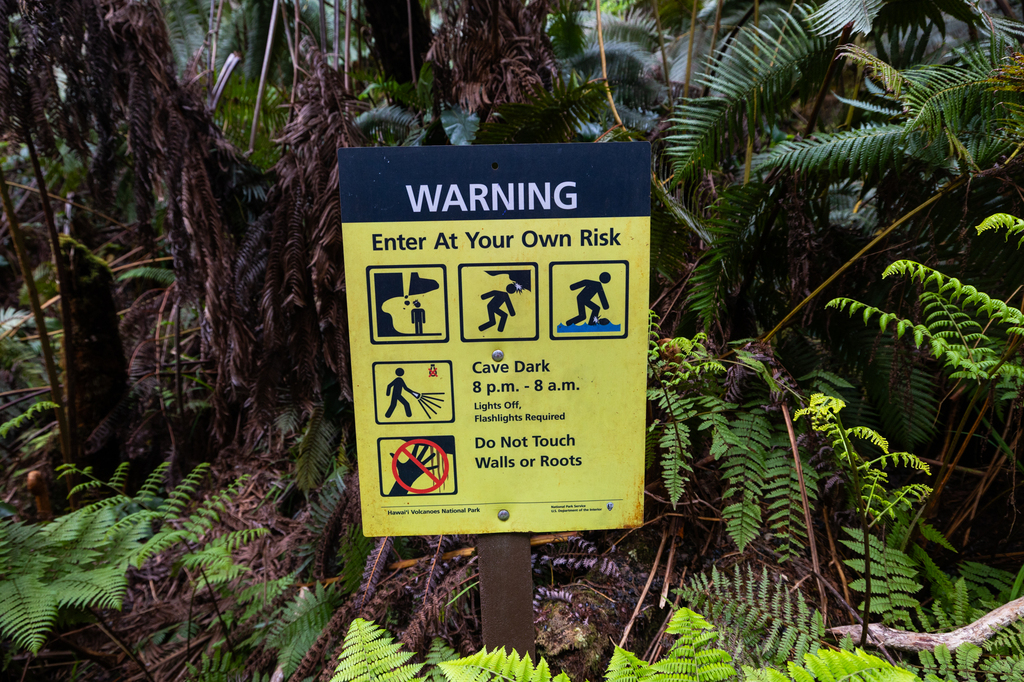
Before visiting Hawai’i Volcanoes National Park, it’s worth taking a moment to read the Pono Pledge. The Pono Pledge is a set of guiding principles that encourages respectful, safe, and responsible behavior while exploring Hawai’i. “Pono” translates to living in balance and doing what is right, and the “pledge” reflects that mindset through simple but important reminders. It’s important to stay on designated trails, respect wildlife, never take lava rocks or sand, and prioritize safety in volcanic environments. It’s a meaningful way to approach your visit, especially in a place as fragile as Hawai’i Volcanoes National Park.
Hawai’i Volcanoes National Park one day itinerary
Below is the perfect 24 hour itinerary for Hawai’i Volcanoes National Park, including the best hikes and scenic overlooks in the national park. I recommend starting your trip early in the morning as this itinerary will take all day! We drove from Hilo and arrived at the park around 10 am, and departed after dark.
Volcano viewing at Kilauea Overlook
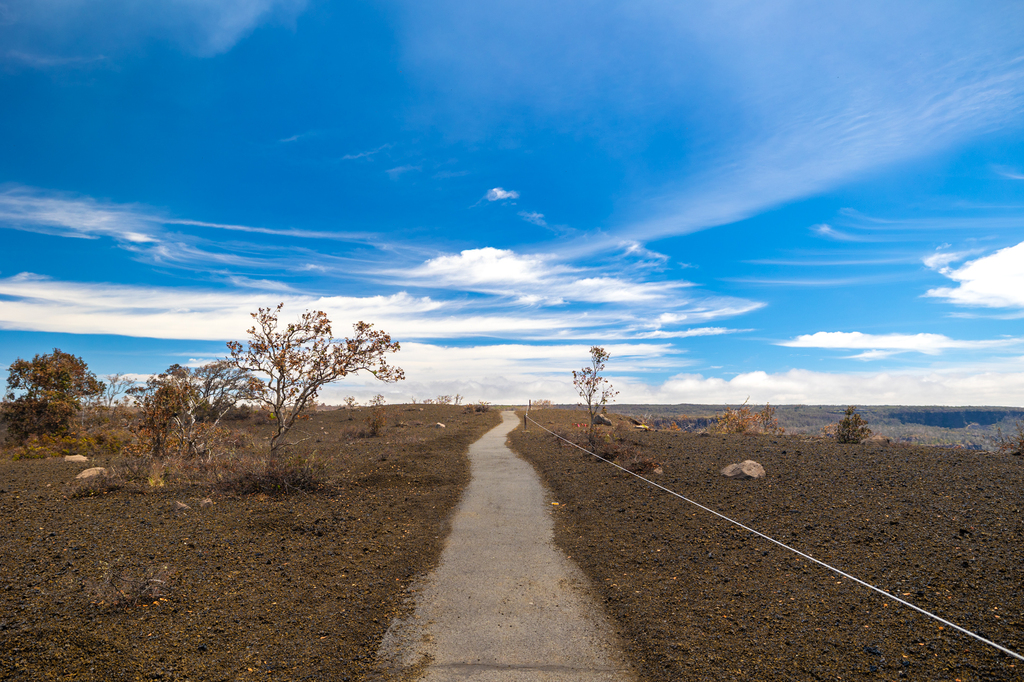
Start your day with a jaw-dropping view of Kilauea crater from the Kilauea Overlook. Free parking is available, and the overlook is just a short 0.1 mile walk from the lot. When we visited, thick plumes of steam rose from the vents below, making the landscape feel otherworldly. This viewpoint sits along the Crater Rim Trail, so you can continue walking along the rim to find different perspectives of the crater.
Just a heads up, this area is very exposed with no shade. It was surprisingly hot, even during our morning visit.
Volcano viewing at Uekahuna Overlook
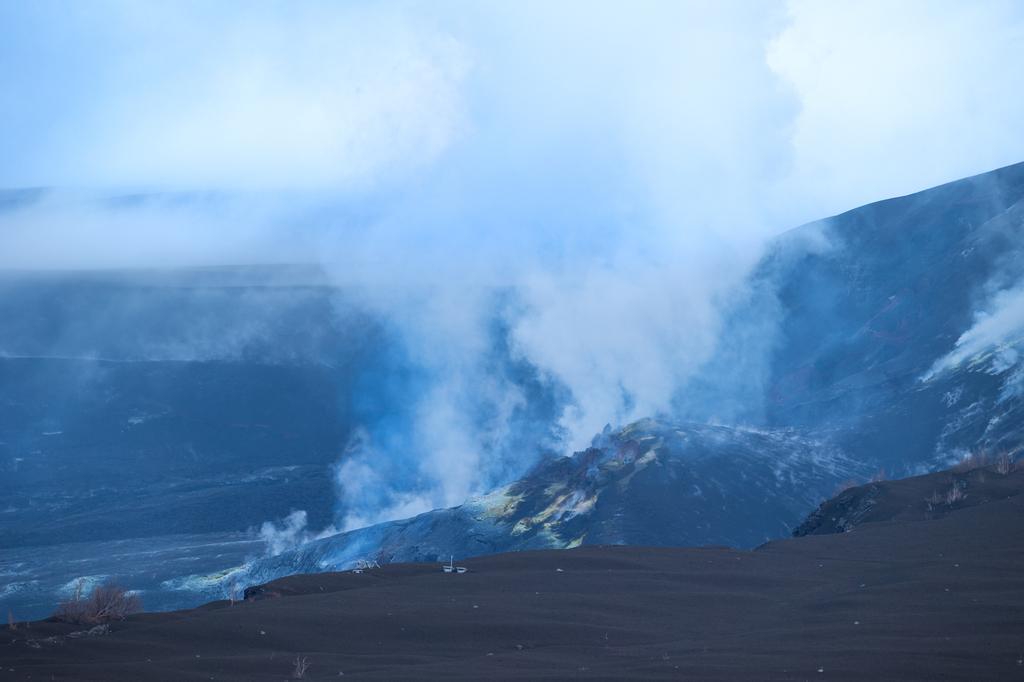
Just down the road is the Uekahuna Overlook, which you can reach either by car or by hiking about 0.5 miles along the Crater Rim Trail from Kilauea Overlook, which is what we did. This overlook offers ample parking, restrooms, and a drinking fountain. I recommend filling up your water here since water-refill options in the park are limited. I personally preferred this viewpoint, as it offered a clearer vantage point of the crater below.
Steaming Bluffs overlook
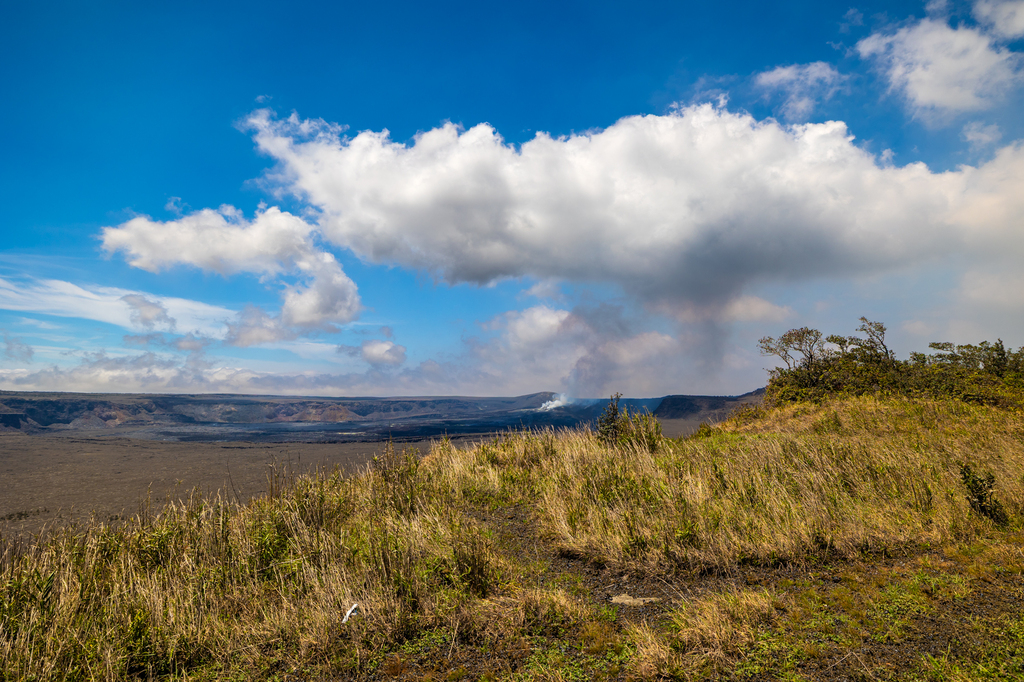
Afterward, head to the Steaming Bluffs overlook for yet another view of the crater. This viewpoint is a few minutes down the road from the previous two viewpoints. As the name implies, this is in an area with dozens of steaming vents, some of which are right next to the hiking trail! It is especially important to stay on trail here, as you can be badly injured by the steam.
You will often find a park ranger or volunteer at this overlook, sharing insights about the volcano and answering visitor questions, which adds even more context to the experience.
Hike the Halema’uma’u Sulfur Banks trail
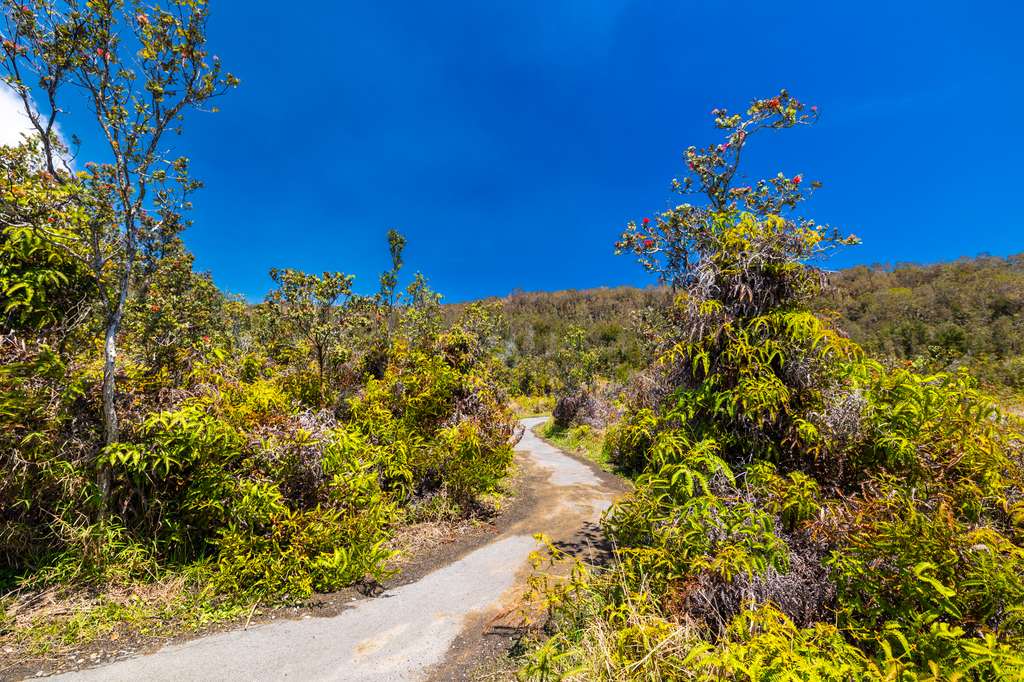
From the same parking lot as the Steaming Bluffs Overlook, set out on the 1.6-mile Halema’uma’u Sulfur Banks Trail. This was one of my favorite hikes in the park! The trail winds past dozens of steaming vents and strikingly colorful hills, created by minerals that have settled onto the rock from the acidic steam. Along the way, interpretive signs explain the unique geology and volcanic activity shaping the area.
Despite the volcanic landscape, this trail is surprisingly lush, with plenty of ferns and trees, though there are still a few exposed sections with little shade. It can be humid along the path!
You will also pass the Volcano Art Center and Welcome Center along the route. Both are open daily and absolutely worth stopping to explore.
Visit the Volcano Art Center

Located right along the Halema’uma’u Sulfur Banks Trail, the Volcano Art Center is a wonderful stop inside the park. This gallery features work from local Hawaiian artists, with pieces inspired by volcanic landscapes, Hawaiian culture, and the natural beauty of the islands. You will find everything from paintings and photography to jewelry and prints.
Even if you are not planning to buy anything, it is worth popping inside, and it is a nice shaded break during your hike.
Hike the Nahuku Lava Trail (Thurston Lava Tube)
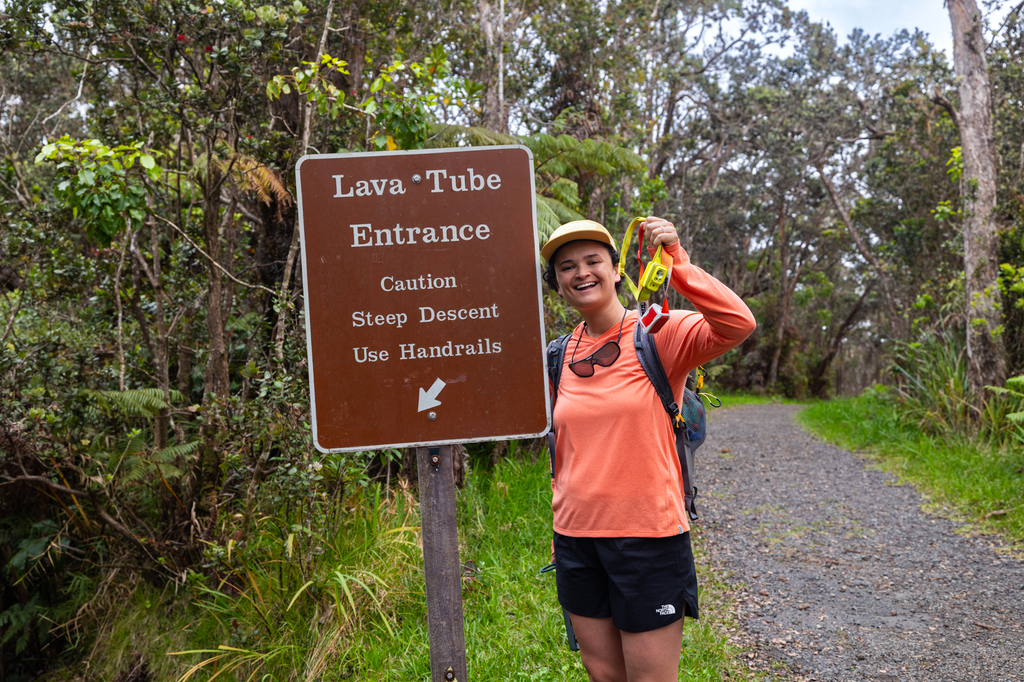
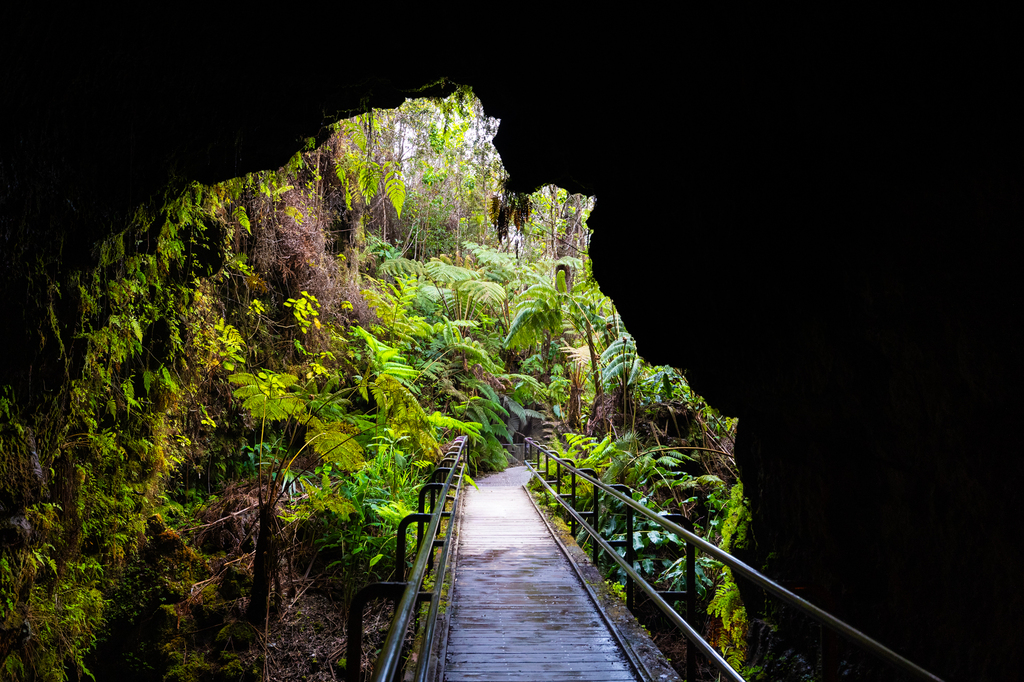
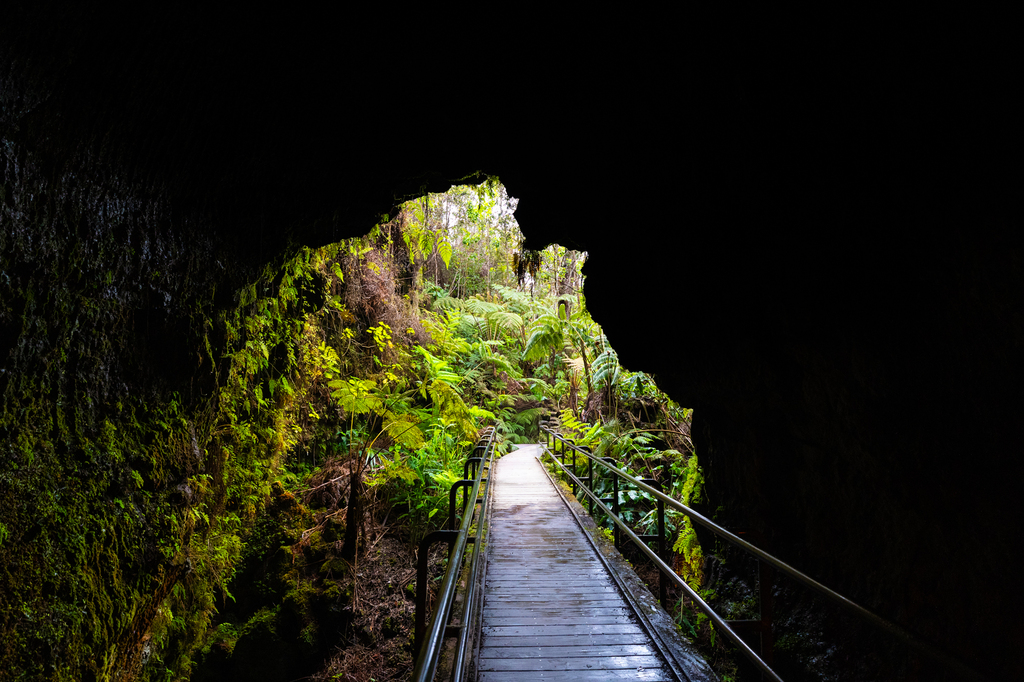
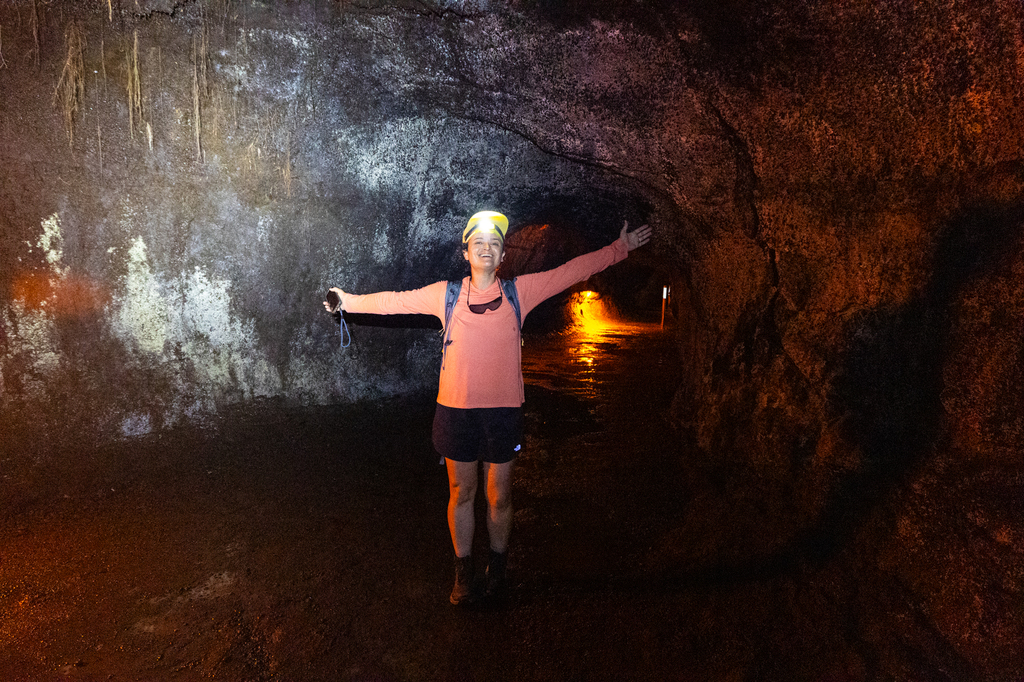
The Nāhuku Lava Tube Trail (Thurston Lava Tube) offers a completely different perspective on Hawai’i Volcanoes National Park. This short, easy trail takes you underground through a massive lava tube. The walk to the tube passes through a lush rainforest, which is a sharp contrast to the volcanic landscapes elsewhere in the park. The cave is lit, but it can be dark and uneven in spots, so sturdy shoes are helpful. The temperature of the lava tube is cool, but not super cold. Headlamps and a light jacket can be helpful, but aren’t necessary.
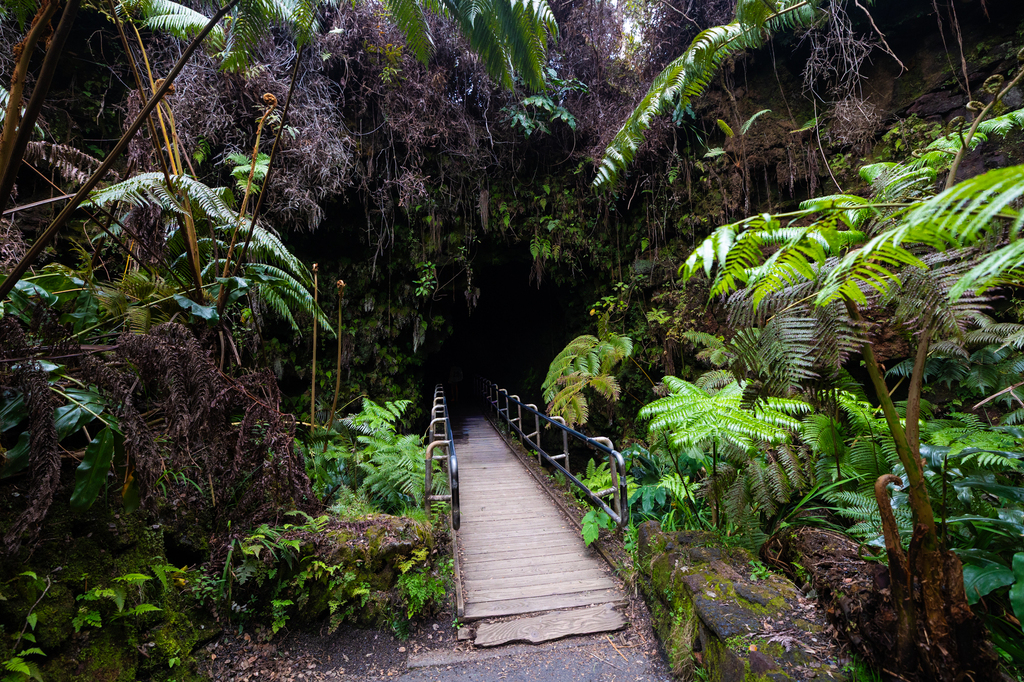
Travel tip: This is one of the most popular trails in the park with limited parking. If you don’t find parking on your first try, I recommend going again later in the day (after the Holei Sea Arch).
Hike the Devastation Point trail
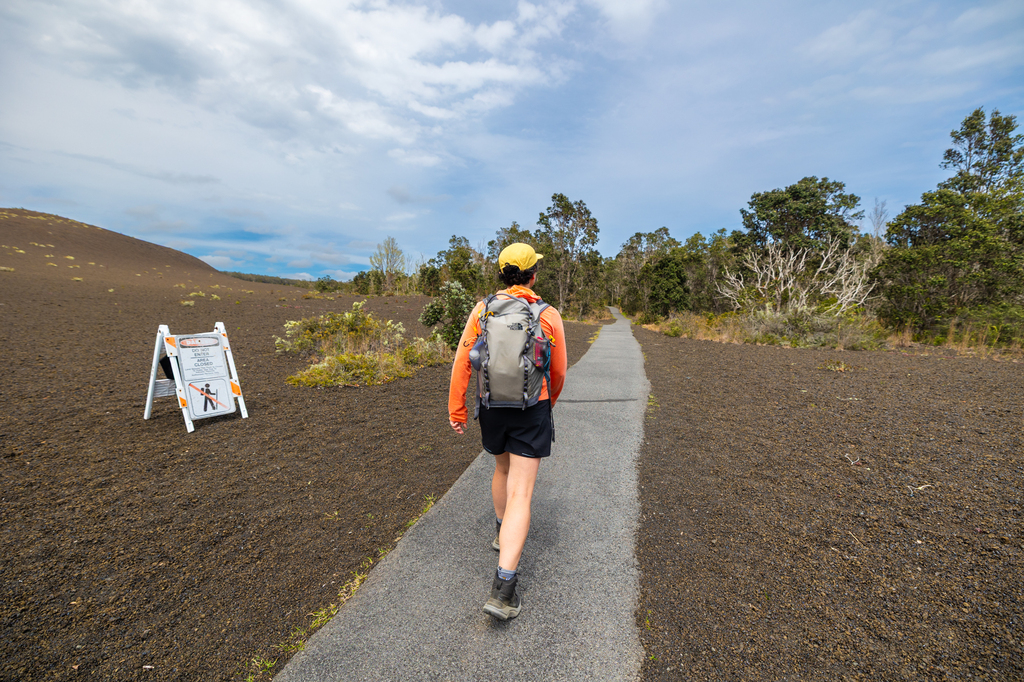
The Puʻupuaʻi Overlook via Devastation trail is a short, 1.0 mile paved walk that highlights the dramatic aftermath of the 1959 Kilauea Iki eruption. Interpretive signs along the trail show striking before-and-after photos of the valley, revealing how quickly and completely the landscape was transformed and filled with a lake of lava.
Drive the Chain of Craters drive
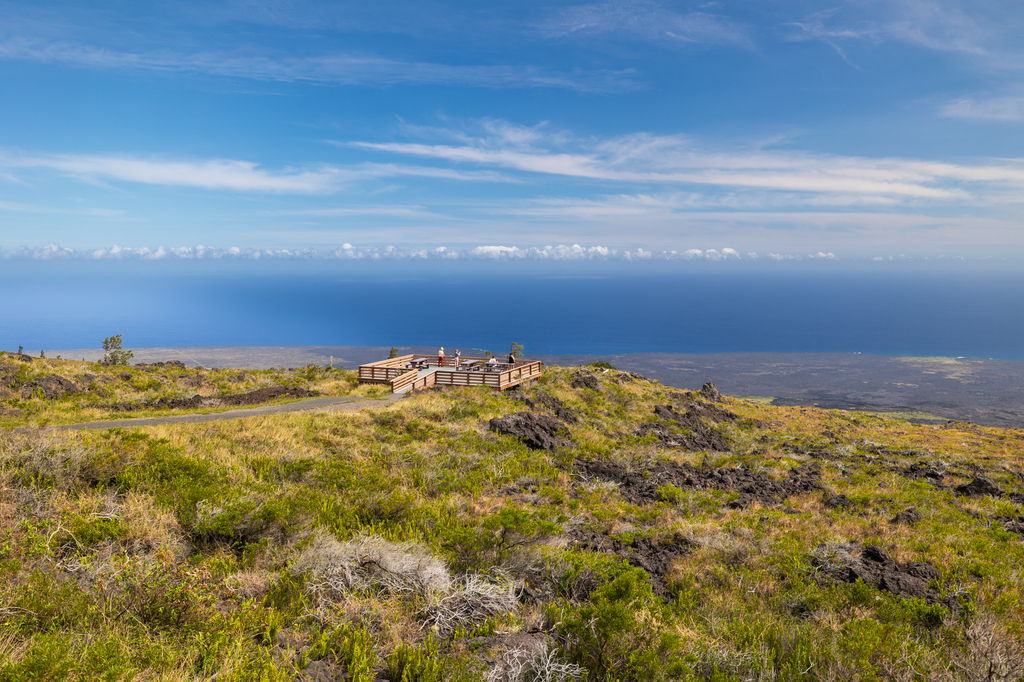
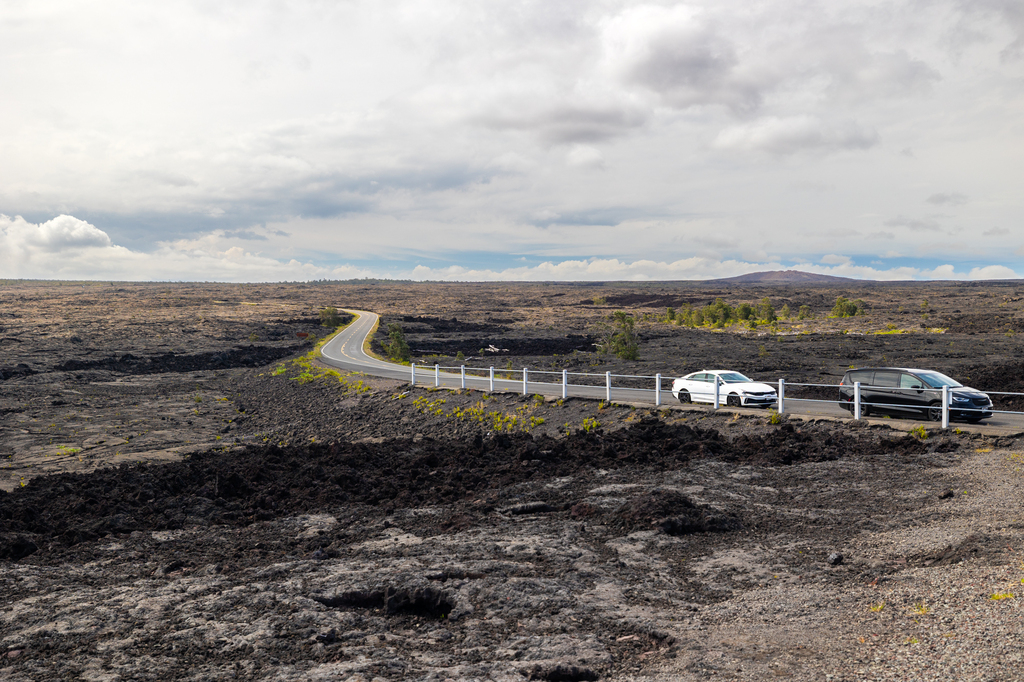
The Chain of Craters Road is one of the most scenic drives in Hawai’i Volcanoes National Park! This 19 mile road (one way) descends from the Kilauea summit area all the way to the coast, winding past lava flows from multiple eruptions. Along the drive, you will see crater after crater, dramatic lava fields, and sweeping ocean views as you approach sea level. There are many scenic pull-outs along the way – choose which ones you want to stop at!
Holei Sea Arch and palm tree grove
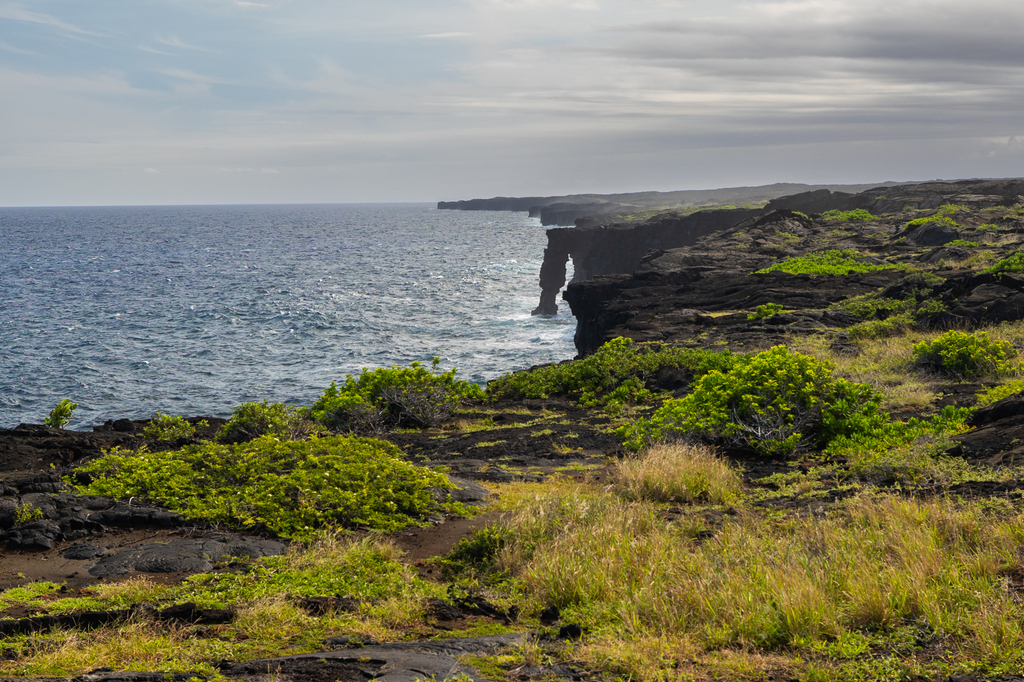
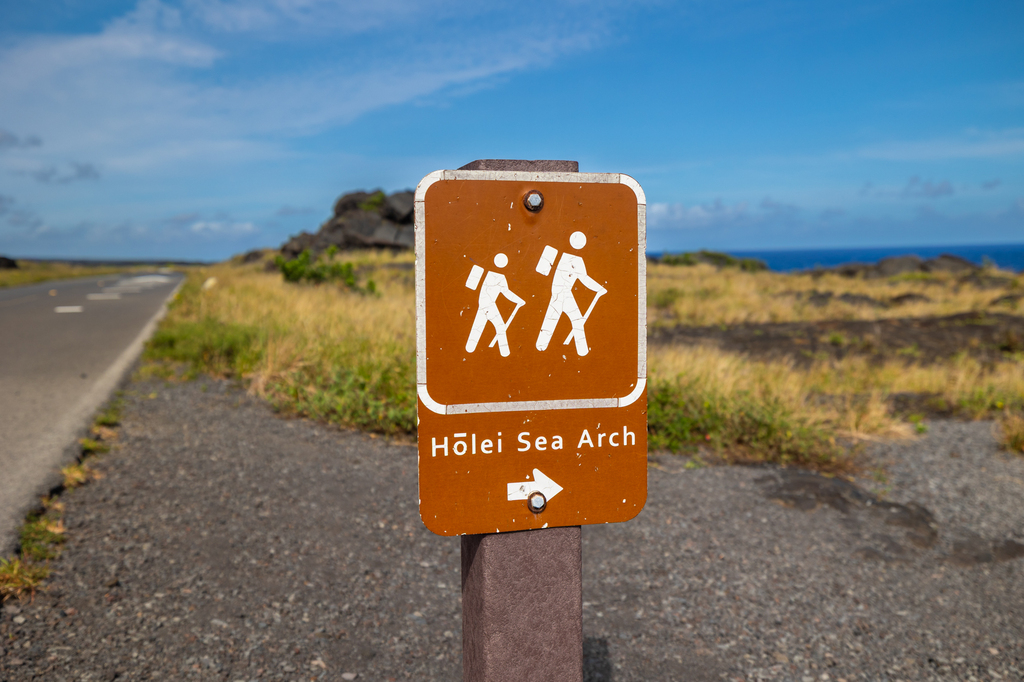
The Chain of Craters Road ends at the coast, where you can take a short walk to view the Hōlei Sea Arch. This 90-foot-tall arch is carved from lava rock and framed by strikingly blue Pacific waters. While this was my least favorite stop along the drive itself, the ocean views alone make it worth the visit.
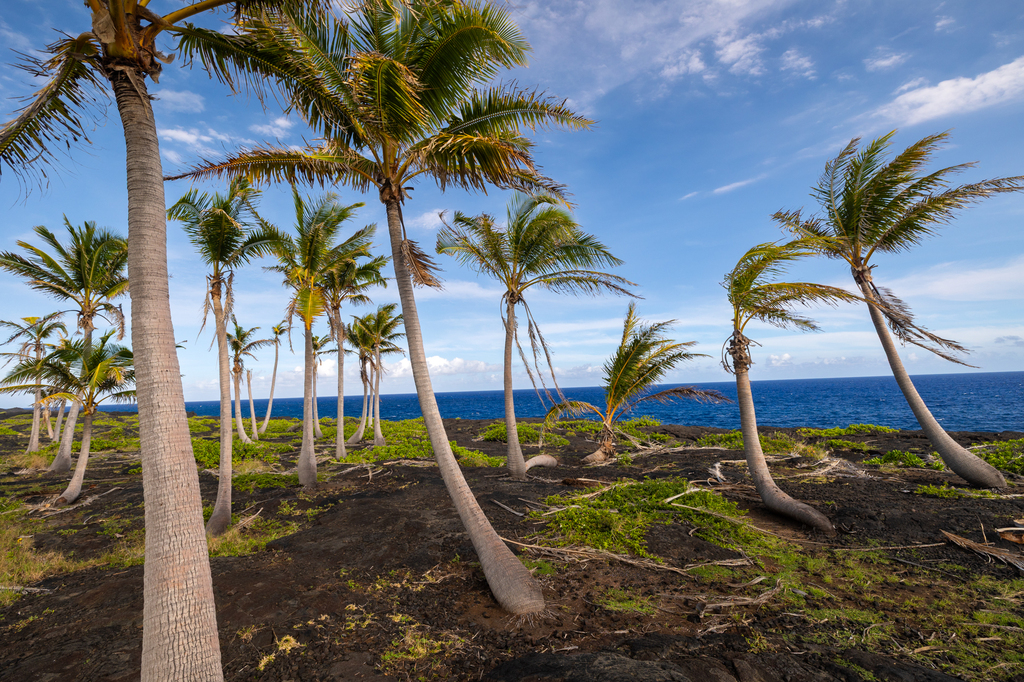

Just north along the road is a small palm tree grove that is quite the contrast in this rugged volcanic landscape. The tall palms set against black lava rock and bright blue ocean create a beautiful contrast, and I was really glad we took a few extra minutes to walk over and see it.
Sunset at Uekahuna Overlook
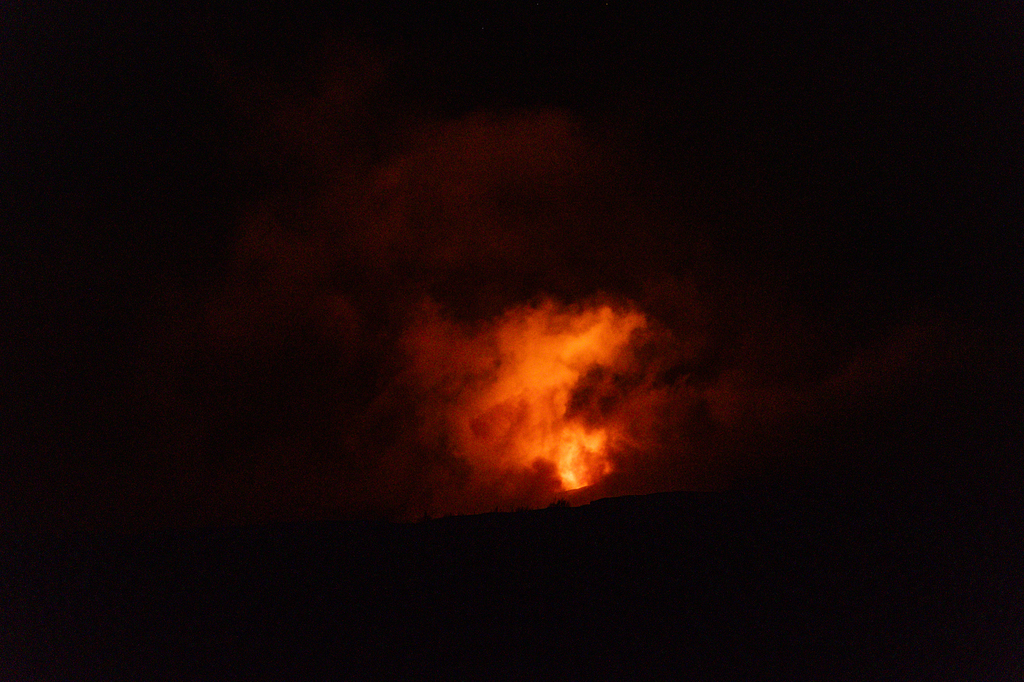
As the day winds down, head back to Uekahuna Overlook for sunset. When we visited in April 2026, the Kilauea vents began to glow red and orange as the sunlight faded, revealing volcanic activity that is not visible during the day. Watching the crater come alive at dusk is an unforgettable experience and a perfect way to end the day in the park.
Be prepared for cooler temperatures after sunset – bringing extra layers is a must!
Ultimate guide to one day in Hawai’i Volcanoes National Park: final thoughts
I hope you found this guide to the perfect one day in Hawai’i Volcanoes National Park to be helpful! If you’re heading to the Island of Hawai’i, this is a must-do stop for a day trip. If you want to do longer hikes in the park you could easily extend your time here to include 2-3 days.
Looking for more Hawai’i itineraries? Click here
You can also find all of our USA national park guides and itineraries here.